Stop Guessing. Start Spying (Ethically) on Your Competition.
Master competitive intelligence marketing with this no-nonsense guide. Learn actionable strategies to ethically spy on rivals and win more customers.
Let's be honest, "competitive intelligence marketing" sounds a little intense, like something out of a spy movie. Don't worry, you don't need a trench coat or a fake mustache.
It’s really just a fancy way of saying you’re ethically keeping tabs on your competition to figure out what the heck they're doing. This is how you dodge expensive face-plants, find golden opportunities your rivals are sleeping on, and make big decisions with solid data instead of a half-baked gut feeling.
So, What Is This Spy Stuff, Really?

Think of competitive intelligence marketing like watching the other team's game tapes before the championship. You're not stealing their playbook—you're just studying everything they do out in the open to learn their strategy. You're basically the Moneyball of your industry.
It’s all about gathering and making sense of information about your market, your industry, and, most importantly, your competitors. This intel helps you make much smarter marketing moves and finally get answers to the tough questions that keep founders tossing and turning at night.
Why You Absolutely Can't Afford to Skip This
Flying blind is a terrible business strategy, but that's exactly what countless companies do. They sink time and money into building products and launching campaigns based on pure guesswork, only to discover a competitor already owns the market or that customers wanted something totally different. Whoops.
Having good competitive intel gives you a huge leg up. It helps you:
- Avoid Reinventing a Broken Wheel: See what blew up in your competitors' faces so you don't make the same costly mistakes.
- Find Hidden Gaps in the Market: Uncover customer needs that your rivals are completely ignoring. Talk about a wide-open opportunity.
- See Market Shifts Coming: Spot trends before they go mainstream, which lets you pivot and adapt way faster than the other guys.
- Nail Your Messaging: Understand exactly how your competitors talk about themselves, so you can carve out a unique story that actually stands out (and doesn't sound like a carbon copy).
> Competitive intelligence is less about secretly hoarding data and more about systematically paying attention. It’s the difference between guessing what works and knowing what works.
This isn’t some obscure tactic only for giant corporations with bottomless budgets, either. The CI industry has absolutely exploded, growing from a small advisory niche into a global market that’s expected to be worth over $50 billion in 2024. This boom is happening because more and more businesses are realizing they simply can't survive without good data.
Manual vs. Automated CI: The Smart Marketer's Guide
Getting started with competitive intelligence doesn't have to be complicated or expensive. You could start today, for free, by just manually digging through competitor websites. On the other end, you have powerful (and often ridiculously expensive) tools like Ahrefs and Semrush. For a great alternative that won't require a second mortgage, check out Already.dev.
But what does the day-to-day work actually look like? Here’s a quick breakdown of the old-school grind versus a modern, automated approach.
| Activity | Manual Way (The Grind) | Automated Way (The Dream) | | :--- | :--- | :--- | | Tracking Competitors | Endless bookmarks, spreadsheets, and calendar reminders to check sites. So much fun. | A central dashboard automatically pulls in all competitor updates. | | Analyzing Content | Manually reading blog posts and social media, trying to spot patterns until your eyes bleed. | AI summarizes key themes, tracks keywords, and identifies content gaps. | | Monitoring Pricing | Visiting pricing pages one-by-one, hoping you notice a change. | Real-time alerts the second a competitor changes their pricing or plans. | | Finding Opportunities | Sifting through forums and reviews, hoping to stumble upon an unmet need. | AI surfaces customer pain points and feature requests from across the web. | | Reporting Insights | Hours spent building presentations and reports that are outdated by Tuesday. | Instant, shareable reports and insights delivered right to your team. |
As you can see, the right tools can make a world of difference. An AI-driven platform like Already.dev offers a much smarter way to get these insights without the manual headache.
To get a more foundational overview of the whole concept, check out our guide on what competitive intelligence is.
Key Plays for Outsmarting Your Competition
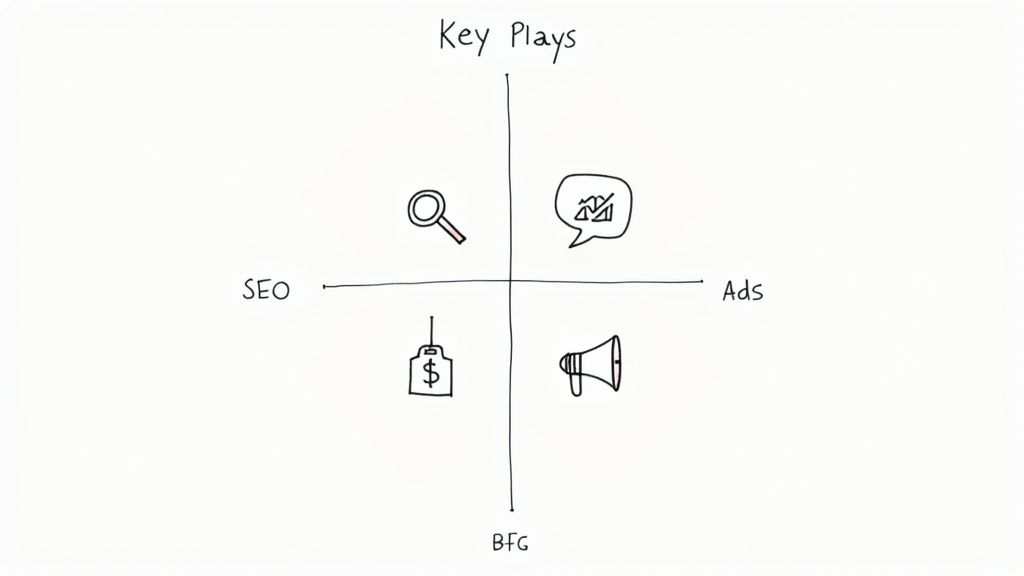
Okay, enough theory. Let's get to the fun stuff—the actual moves you can make to start gathering intel. This isn't about drowning in spreadsheets; it's about making smart, targeted plays that get results.
Think of these as your core playbook. You don't have to run every single play at once. Honestly, just picking one and really nailing it will put you miles ahead of the competition still operating on guesswork.
SEO and Keyword Reconnaissance
First things first: you need to see what’s making your competitors pop up on Google. The goal is to find the exact search terms they rank for that you don't. This is one of the quickest ways to start steering some of their hard-won traffic over to your site.
Your mission is simple: find their "money" keywords. These are the golden nuggets that bring them actual customers, not just random clicks.
- Gap Analysis: The classic move. Find keywords your competitors rank for in the top 10, while you’re stuck on page five or worse.
- Backlink Spying: See which websites are linking to their pages. Every good link is basically a vote of confidence, and you can often replicate that success for your own content.
- Content Opportunities: Pinpoint which of their blog posts or landing pages get the most organic traffic. This is a dead giveaway for what topics your shared audience actually cares about.
Tools like Ahrefs or Semrush are the big dogs here, but let's be real, they can be super expensive. For a more automated approach that won't break the bank, a platform like Already.dev can dig up these insights for you without the serious monthly commitment.
Content and Social Media Audits
Next, you need to figure out what your competitors are actually talking about and who's listening. Running a quick audit of their content and social media presence is like getting a backstage pass to their marketing strategy.
You're hunting for patterns. Are their long, in-depth guides the ones getting all the shares, or are short-and-sweet videos their secret weapon?
> The goal isn’t to copy your competitors. That's lame. It's to understand their content strategy so well that you can create something that serves the audience even better.
This kind of intel helps you spot what’s hitting the mark, what's flopping, and where the conversation is moving. Are they all-in on TikTok while you’re still putting all your energy into Facebook? That’s a massive clue. In the end, this is how you build a sustainable competitive advantage that lasts.
Choosing Your Competitor Analysis Toolkit
Alright, let's talk about the gear you'll need. You can't just stare at your competitors' websites and hope insights magically appear. You need the right tools for your competitive intelligence mission. But before you start picturing massive invoices, let me be clear: you don't need a huge budget to get started.
The goal here is to build a smart, affordable stack that does the heavy lifting for you, not to buy the biggest, shiniest platform on the market.
The Big Guns (And Their Big Price Tags)
When you first start searching for "competitor analysis tools," you'll immediately run into the industry giants. I'm talking about comprehensive platforms like Semrush and Ahrefs. These are the all-in-one powerhouses that can track keywords, dissect backlink profiles, and give you a full diagnostic of a competitor’s entire online presence.
They are incredibly powerful, there's no doubt about it. But let's be real—their pricing can be a major hurdle, especially if you're a startup or a smaller team. We're talking hundreds, and sometimes thousands, of dollars every single month. It's a serious investment that many just can't justify right out of the gate. For an alternative that does a lot of the same stuff without the eye-watering price, check out already.dev.
But here’s the good news: the big guys aren't your only option. You can absolutely piece together a killer toolkit without taking out a second mortgage.
Building a Smarter, Leaner Toolkit
Instead of dropping a ton of cash on one massive platform, think about building a more focused setup. The key is to find tools that specialize in the specific areas of competitive intelligence you care about most.
- Social Listening Tools: These platforms are your digital ear to the ground, tracking mentions of your competitors across social media, forums, and review sites. You get to hear what real customers are actually saying.
- Ad Monitoring Tools: Ever wonder what ads your rivals are running on Facebook or Google? These tools pull back the curtain, showing you their ad creative, copy, and where they're putting their budget.
- SEO & Content Tools: Beyond the big guys, there are tons of nimbler tools for tracking specific keywords or analyzing the top-performing content in your niche.
> The smartest move isn't buying the most expensive tool; it's automating the most tedious work. Your time is your most valuable asset, so find tools that give it back to you.
This is exactly where AI-driven platforms are starting to shine. The market for these tools is projected to explode, potentially hitting $1.1 billion by 2032. Why? Because AI and cloud-based systems are finally making continuous monitoring easy and affordable for everyone.
Instead of paying for a dozen features you'll never touch, an automated platform like already.dev handles the most critical, time-consuming tasks—like tracking competitor marketing campaigns, pricing changes, and new feature launches—without that enterprise-level price tag. It connects the dots for you, saving you a massive amount of time and money.
Choosing the right tool depends entirely on your team's specific needs, budget, and the kind of data you're after.
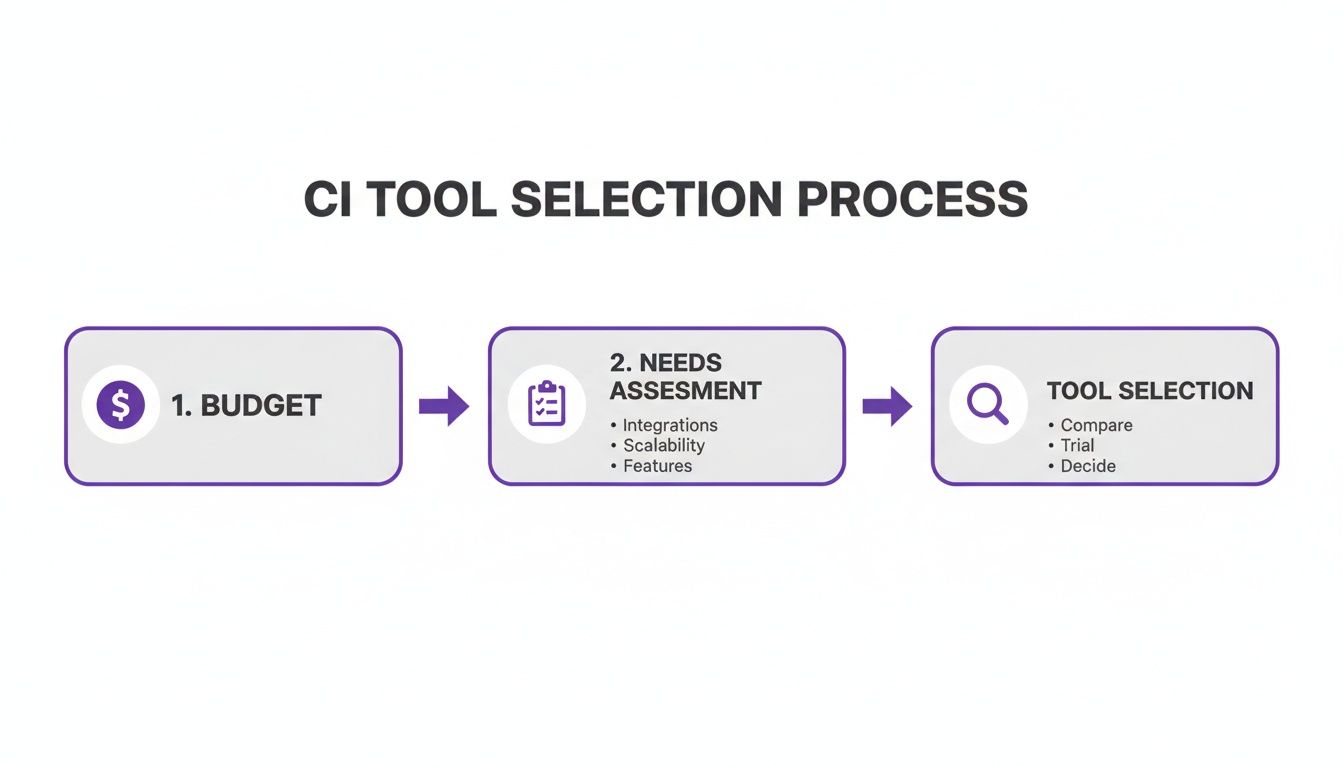
To help you get started, here's a quick comparison of some popular tools out there. For a deeper dive, check out our guide on the best competitive intelligence tools to find the perfect fit for your needs.
Turning Competitor Data into Winning Moves
Having a pile of competitor data is like having a pantry full of random ingredients. It's useless until you actually cook something with it. This is where we stop just collecting data and start building a real process that leads to actual marketing wins.
The first step? Figuring out who you're really competing against. It’s not always the big, obvious names. Sometimes, your most dangerous rival is a scrappy startup nobody’s heard of yet, quietly stealing your customers by solving the problem from a totally different angle.
Setting Up Your Watchtower
Once you know who to watch, you need a system. The market doesn’t take weekends off, and neither do your competitors. Setting up a way to continuously monitor them is the only way to stay ahead.
This doesn't mean you need to be glued to your screen 24/7. It means using tools to get alerts on the important stuff—the signals that matter.
- Pricing Changes: Did a competitor just slash their prices or introduce a new, cheaper tier? You need to know that, fast.
- New Feature Launches: Are they rolling out something your customers have been begging you for? That’s a major threat.
- Shifts in Messaging: Have they suddenly changed their homepage headline to target a whole new audience? That's a strategic shift you can't afford to miss.
Big-name SEO tools like Ahrefs or Semrush can help, but their monthly fees can be painfully high for a lot of teams. A more focused and affordable alternative like already.dev can automate this kind of monitoring, sending you alerts so you can react fast without all the manual grunt work.
From Analysis to Action
Okay, this is the final and most important step: turning all that intelligence into action. This is where you connect the dots and make your move. If you spot a weakness, you exploit it. If you see an opportunity, you seize it.
To really get the most out of your competitor insights, diving into B2B data enrichment strategies can show you how to layer different data sources to build a much richer picture.
Let's say your analysis reveals a competitor has a ton of terrible online reviews, all complaining about their poor customer support. Boom. That's your cue to launch a marketing campaign highlighting your amazing, award-winning support team.
A great way to organize these insights for your team is by building out some killer competitor battle cards. They give your sales reps the exact ammo they need to win deals when they go head-to-head.
How Underdogs Win with Competitive Intelligence

Alright, enough with the theory. Let's get to the good stuff. How does this whole "competitive intelligence" thing actually play out in the real world? This is where the magic happens—it’s how the little guys, the scrappy startups, and the hungry underdogs can punch way above their weight.
Forget those dry, jargon-filled corporate case studies. These are real stories about how being clever with competitor intel can completely change the game for a small business.
Finding Gold Where Others Weren't Digging
Picture a tiny SaaS startup—just three people crammed into a co-working space—trying to go head-to-head with a publicly-traded behemoth. The big guys were dumping a fortune into Google Ads, bidding on all the obvious, high-traffic keywords. Our little startup couldn't even dream of competing on budget.
So, they got smart. Using a competitive analysis tool, they started digging into their rival’s SEO strategy and found something incredible. While the giant was focused on broad, expensive keywords, they were completely ignoring a whole cluster of super-specific, long-tail search terms. These were the actual questions real customers were asking, but because the search volume was low, the big company’s agency never bothered with them.
The startup got to work, building out a series of blog posts that answered those exact questions. It cost them next to nothing but their time. In just three months, they were ranking #1 for dozens of these niche terms, pulling in a steady stream of highly qualified, ready-to-buy leads. They didn't outspend the giant; they completely outsmarted them.
> The best competitive intelligence marketing moves don't require a bigger budget. They just require you to pay better attention than everyone else.
Turning Customer Complaints into Your Killer Feature
Here’s another classic underdog move. An e-commerce brand selling eco-friendly cleaning supplies was really struggling to get noticed against massive household names. They knew they had a good product, but breaking through all that noise felt impossible.
Instead of just looking at what their competitors were saying in their marketing, they did something different: they became obsessed with their competitors' customer reviews. They spent weeks combing through one- and two-star reviews on Amazon, Trustpilot, you name it.
A clear pattern jumped out. Customers of the big brands were constantly complaining about the flimsy spray nozzles on the bottles. They always seemed to break or clog. It was a small detail, but it was an intensely annoying problem for a lot of people.
So, what did our small brand do?
- They sourced a high-quality, durable spray nozzle that wouldn't break.
- They launched a new marketing campaign with a simple, powerful headline: "The only spray bottle that won't quit on you."
- They even sent free samples to influencers who had previously griped online about the competitor's flimsy bottles.
The result? They tapped directly into a massive, unspoken frustration and started stealing market share. That's the power of competitive intelligence in action.
So What's the Real Payoff? Moving Beyond Theory
We've covered the what and the how. But let's get down to the real question you're probably asking: "Why should I add one more thing to my team's plate?" The answer is simple. Competitive intelligence isn't just another item on a checklist; it's a fundamental shift in how you operate and, more importantly, how you win.
Think of it as trading a blurry map for a high-res GPS. Instead of launching a feature and crossing your fingers, you're building with the quiet confidence that comes from knowing it's what people want. You've already seen them begging for it in your competitor's Capterra reviews for the last six months. That’s the difference.
Turning Gut Feelings into Cold, Hard Cash
This isn't about vague, feel-good wins. A solid, consistent CI program delivers real, tangible results that show up on the balance sheet.
- Seal More Deals: When your sales team walks into a call armed with exactly how you stack up against Competitor X, they stop getting blindsided and start closing deals they used to lose.
- Keep the Customers You Have: You'll spot the early warning signs when a competitor makes a move that could lure your customers away. This gives you time to react, adapt your messaging, or even adjust your product to keep them from churning.
- Build a Better Product, Faster: No more wasting precious engineering cycles on features that sound cool but solve zero actual problems. You can focus your resources on filling the gaps your competitors have left wide open.
- Stop Wasting Marketing Dollars: Instead of burning cash on ad campaigns that miss the mark, you’ll know precisely which messages are hitting home and which channels your rivals are already dominating (or ignoring).
This is why companies are starting to invest seriously in this space. The market for CI software among SMBs is expected to explode from $2.56 billion in 2023 to a whopping $6.02 billion by 2030. It's a clear signal that businesses are done with guesswork. They see this as a core driver of revenue and expect a clear return on that investment. You can find more data on the latest CI trends in recent industry reports.
At the end of the day, this is about building a business that doesn't just survive in a crowded market—it learns, adapts, and outmaneuvers the competition to truly thrive.
Got Questions? We've Got Answers
Still have a few questions about competitive intelligence marketing? You're not alone. Let's tackle some of the most common ones and clear things up.
Is This Whole Competitive Intelligence Thing... Ethical?
Yes, absolutely—as long as you’re not trying to be James Bond. We're talking about analyzing publicly available information. Think websites, social media posts, press releases, and ads. It's definitely not about hacking, corporate espionage, or bribing disgruntled employees for secrets.
It’s more like being a sports analyst who studies every public move an opponent makes. It's strategic, it's smart, and it's completely above board.
How Often Should I Be Spying on My Competitors?
This isn't a one-and-done task you can just check off a list. The market is always moving, so your analysis needs to be ongoing.
A good rhythm is to do a deep dive once a quarter, with weekly or even daily check-ins on important signals like new ad campaigns or sudden pricing changes.
Of course, that sounds like a ton of work. This is where an automated tool like Already.dev can be a lifesaver. It sends you alerts when something important happens, so you don't have to spend your days manually refreshing competitor websites.
Can I Do This With a Zero-Dollar Budget?
You sure can. You don't need a boatload of expensive, complicated tools to get started. While big platforms like Ahrefs or Semrush are powerful, their price tags can be intimidating. The good news is that many amazing insights simply come from paying attention. A great alternative that has a generous free plan is Already.dev.
> Your time is your first and most valuable tool. Start by dedicating a bit of it each week to focused observation, and you'll be surprised by what you can uncover for free.
Just spend an hour each week manually reviewing your top three competitors' websites and social media feeds. Set up free Google Alerts for their brand names. While paid tools make the process faster and more scalable, the core principles of observation and analysis only cost you your time.
Ready to stop guessing and start knowing what your competitors are up to? Already.dev uses AI to automate the tedious work of competitive research, delivering the insights you need in minutes, not weeks. Get started for free at Already.dev.