How to Find Keywords Your Competitors Are Using (And Steal Their Traffic)
Discover how to find keywords competitors are using. Learn simple, actionable tactics to analyze their SEO strategy and find keywords that drive real traffic.

Want to know what keywords your competitors are using? You could spend hours manually digging through their websites, which sounds about as fun as a root canal. Or, you could use a smart SEO tool to instantly see every single term they rank for.
This whole process, what nerds call competitive keyword analysis, is easily the fastest way to find search phrases that are already proven to bring in customers in your market. It's like being handed the answer key before the test.
Why Their Keywords Are Your Best Shortcut

Let's be real, you're not trying to reinvent the wheel here. Your competitors have already burned through a ton of time and cash figuring out which keywords actually attract paying customers. And that's fantastic news for you.
They've run all the expensive, time-sucking experiments. They’ve tested hundreds of phrases, written countless articles, and crunched the numbers to see what works. Now, you get to peek at their homework.
This bit of digital snooping is the ultimate cheat code for your marketing. It’s like being handed your rival's playbook right before the championship game.
Discover What Your Audience Actually Wants
You might think you know what your customers are searching for, but our assumptions are often hilariously wrong. Looking at your competitors' keywords takes all the guesswork out of the equation. You get to see the exact language and phrases real people are using when they need the solutions you offer.
This is about more than just a list of terms; it’s about decoding customer intent. Are they just gathering info ("how to unclog a drain") or are they ready to buy ("24-hour plumber near me")? That kind of insight is pure gold.
Find Untapped Keyword Opportunities
You'd be shocked at how often competitor analysis uncovers "money" keywords you totally overlooked. These are usually specific, long-tail phrases that signal someone is super close to making a purchase.
And these are the keywords that really matter. A massive 94% of all search traffic comes from keywords with 10 or fewer monthly searches. In fact, these long-tail keywords make up 70% of all searches. By reverse-engineering what works for them, you can find these hidden gems that drive highly qualified leads.
> The goal isn't just to copy your competitors. It's to understand their strategy, pinpoint their weaknesses, and find the gaps where you can swoop in and do it better.
Sidestep Rookie Mistakes and Save a Ton of Money
Why blow your budget targeting keywords that don't convert? Your competitors have already done the hard work of weeding out the duds. By focusing on terms they already rank for, you're starting with a proven list.
If you're still in the early stages, our guide on how to find competitors can help you get your bearings.
You could use big, expensive SEO suites like Ahrefs or Semrush for this, but their price tags can be pretty steep. Seriously, they cost a fortune. A more focused and affordable tool like Already.dev gives you the same critical insights without the enterprise-level overhead. This lets you put your time and money where it counts—creating content that you know has a high chance of success right from the start.
Uncover Their Organic Traffic Goldmine
Alright, let's get into the good stuff. Forget guessing games. We're about to do some real digital snooping to find the exact search terms that are already sending a steady stream of customers to your competitors.
Think of your competitor's website as a treasure map. The pages pulling in the most organic search traffic are marked with a big "X," and the keywords they rank for are the clues to finding the gold. Our job is to find that map and start digging.
We're going to use real data, not hunches. Manually checking their website or trying to guess what they're targeting is like trying to find a needle in a haystack—while blindfolded. Let’s use the right tools to see what’s actually working for them right now.
Peeking at Their Top Performing Pages
The easiest place to start is by figuring out which of your competitor's pages are their traffic magnets. Every website has a few "power pages"—usually a handful of blog posts, landing pages, or free tools—that bring in the vast majority of their organic visitors.
Once you know which pages are their big winners, you can start to reverse-engineer their success. It’s not about ripping them off; it's about understanding the "why" behind their performance.
- Is it a ridiculously detailed guide? Maybe your content is just scratching the surface.
- Is it a free tool or template? Perhaps your audience is looking for utility, not just another article.
- Is it a collection of case studies? They could be winning by showing concrete proof instead of just making claims.
This kind of analysis gives you so much more than a simple keyword list. To go deeper on this, check out our full guide to website competitor analysis to see how all these pieces fit together.
Using Tools to Find Competitor Keywords
This is where things get really interesting. SEO tools let you plug in any competitor's domain and see practically every single keyword they rank for in Google's top 100 results. It's the ultimate cheat sheet.
The big industry players like Ahrefs and Semrush are fantastic for this, but let's be honest, they're incredibly expensive, often running hundreds of dollars per month. That's a huge barrier if you're just getting started or working with a tighter budget.
The good news? You don't need a massive budget to get this crucial data. A tool like Already.dev is built specifically to give you these insights without the painful price tag. You just pop in a competitor's URL and see the exact terms driving their business.
Looking at competitor traffic share by keyword gives you an instant lay of the land. You can quickly see which terms are the most contested and, more importantly, where you might have an opening to grab a piece of the action.
Moving Beyond the List to Understand Intent
Getting a list of 500 keywords is the easy part. Knowing which ones actually matter is where the real work begins. The most critical step is to figure out the search intent behind each phrase. What was someone really trying to accomplish when they typed that into Google?
> Don't just collect keywords; decode the human problem behind them. A phrase like "best project management software" isn't just four words—it's a cry for help from someone whose projects are a complete mess.
To truly tap into your competitors' organic search keywords, you have to understand what the searcher is trying to do. Most keywords fall into one of these buckets:
- Informational Intent: The user wants to learn something. Look for "how to," "what is," and "best ways to" phrases. These are perfect for creating helpful, top-of-funnel blog content.
- Transactional Intent: The searcher is ready to pull out their wallet. These keywords include terms like "buy," "price," "discount," or specific product SKUs. These are pure gold for your product and sales pages.
- Commercial Investigation: The user is comparing their options. Think "review," "comparison," "vs," and "alternative." This is your chance to swoop in with content that proves you're the best choice.
- Navigational Intent: They're just looking for a specific site (e.g., "acme corp login"). You can pretty much ignore these unless they're searching for your own brand.
By sorting the keywords you find into these categories, you transform a messy spreadsheet into a powerful content strategy. You’ll know exactly which terms map to blog posts, which belong on service pages, and which could inspire a killer comparison guide that siphons traffic directly from your rivals.
Decode Their Paid Ad Strategy
Organic traffic is fantastic, but paid ads? That's the real cheat code.
When a competitor is willing to throw actual, hard-earned cash at a keyword, you can bet it's making them money. They simply wouldn't be paying for those clicks unless they were turning into paying customers. It’s a direct signal of what works.
This is where we get to do a little legal spying on their paid search game. By digging into the keywords they're bidding on in Google Ads, you get a direct line into their most profitable, commercial-intent search terms. These are the golden phrases people type right before they pull out their credit cards.
Following the money is one of the smartest ways to find keywords competitors are using because it cuts right through the noise. There’s no guesswork here. If they're spending, it's working.
Spying on Their Google Ads Playbook
So, how do you actually see what they're bidding on? You can’t just peek inside their Google Ads account (that would be illegal, and way less fun). Instead, you’ll need an SEO tool that tracks paid search activity across the web.
The big-name platforms like Semrush can show you a competitor’s entire paid keyword portfolio, right down to the specific ads they're running. But be warned, these tools often come with an eye-watering monthly subscription that can easily run into the hundreds. It’s a serious investment.
For a more budget-friendly approach, a tool like Already.dev gives you those same crucial insights into their paid strategy without the hefty price tag. It helps you pinpoint the commercial keywords driving real business for them, so you can decide if it's a battle worth fighting. You can check out a full comparison of the best competitor analysis tools to see which one fits your budget and needs.
It's More Than Just Keywords—It's Intel
Getting a list of their paid keywords is just step one. The real magic happens when you start dissecting their ad copy. Their ads are like tiny, hyper-focused sales pitches that reveal an incredible amount about their overall strategy.
> Think of each ad as a miniature billboard. It tells you exactly which customer pain point they're targeting, what unique selling proposition they're leading with, and what they believe is the most compelling reason to click.
As you look at their ads, ask yourself a few key questions:
- What problem are they solving? Is their language all about saving time, saving money, or reducing stress? The words they choose will tell you everything.
- What features do they highlight? If they constantly mention "24/7 support" or "free integration," that's probably a key differentiator that really resonates with their audience.
- What's their call to action (CTA)? Are they pushing for a "Free Trial," a "Demo Request," or an immediate "Buy Now"? This shows you exactly where they're trying to send their most valuable traffic.
Let’s say you sell project management software. You notice your main competitor is bidding heavily on "asana alternative for small teams" and their ad copy reads: "Tired of Asana's complexity? Get a simpler tool. Free forever plan."
Boom. You just learned three incredibly valuable things:
- The Keyword: "asana alternative for small teams" is a high-intent, money-making phrase.
- The Pain Point: Their target customers feel Asana is just too complicated.
- The Hook: They are using simplicity and a "free forever" offer to reel people in.
This isn't just a keyword anymore; it's a complete marketing angle you can adopt, adapt, or counter. You could create your own ad that says, "More Powerful Than Asana, Just as Simple. Start Your Free Trial." Now you're competing on strategy, not just bidding on the same words.
Find Keywords in Their Content and Communities
Alright, so far we've been deep in the data—poking around organic rankings and paid ads. That's all crucial, but some of the most potent keywords your competitors are using aren't hiding in a Semrush dashboard. They're woven right into their website content and scattered across the communities where their customers actually talk.
This is where we shift from spreadsheets to empathy. You get to see the exact language they use to build a connection with their audience. It's less about search volume and more about understanding the real intent and emotion behind the words—the kind of stuff automated tools almost always miss.
Think about it. Their blog posts, help docs, and case studies are all carefully written to hit home with a very specific person. By digging into this content, you're not just grabbing keywords; you're learning to speak your customer's native language.
Mine Their Website Content for Clues
Your competitor's website is a treasure trove of qualitative keyword insights. Don't just glance at the homepage and call it a day. You've got to roll up your sleeves and get into the content they've built to teach, support, and ultimately, sell.
I like to start by methodically combing through these spots:
- Blog Posts and Articles: Check out their headlines and subheadings. These are usually framed around the very questions their ideal customers are punching into Google. A title like "5 Ways Our Software Solves X" is a dead giveaway that they're targeting people wrestling with "problem X."
- Help Docs and FAQs: This is pure, unadulterated keyword gold. The titles of their support articles are literally the problems their users need to solve. An article titled "How to integrate with Salesforce" isn't just a help doc; it's a direct signal of a valuable, solution-oriented keyword.
- Case Studies and Testimonials: Zero in on the "before" part of the story. How did their customers describe their frustrations before they found the product? Those pain points are the emotionally charged, high-intent keywords you're looking for.
This hands-on approach gives you the context and nuance behind the search terms. You're not just collecting a list of phrases; you're actually mapping out the entire customer journey, from problem-aware to solution-ready.
Eavesdrop on Customer Conversations
Want to find keywords so fresh they haven't even registered on an SEO tool's radar yet? Then you have to go where people are talking. I'm talking about the places where they air their grievances and ask for genuine recommendations.
Communities like Reddit, Quora, and niche industry forums are where the raw, unfiltered voice of the customer lives. This is where you can find keywords competitors are using in the wild, often before they've even optimized a single page for them.
The game plan is simple: search these platforms for your competitor’s brand name. You're not hunting for glowing reviews. You're looking for complaints, tough questions, and posts where people are comparing them to other solutions.
> A Reddit post titled "Is [Competitor A] worth it, or should I just use [Competitor B]?" isn't just a casual chat. It's a high-intent keyword cluster that reveals a direct comparison your potential customers are making right now.
This is such a powerful tactic because it's always current. What’s wild is that while branded terms make up over 44% of U.S. searches, a massive 15% of all Google searches have never been searched before. And guess where those brand-new queries often show up first? Places like Reddit. (You can find more fascinating numbers in these SEO statistics on SearchAtlas.com).
By keeping an ear to the ground in these communities, you stop reacting to what competitors ranked for six months ago. Instead, you start proactively discovering the keywords that are going to matter six months from now.
Turn Your Keyword List into a Smart Strategy
Let's be honest. You've probably got a massive, messy spreadsheet staring back at you, overflowing with keywords you’ve swiped from your competitors. It feels like you're making progress, but a list isn't a plan. It's just a pile of ingredients without a recipe.
A raw keyword list is pretty much useless on its own. This is the point where we stop hoarding data and start making smart decisions. We’re going to transform that chaotic list into a sharp, actionable content strategy that actually gets you somewhere.
The goal isn't to just throw spaghetti at the wall and see what sticks. It's to build a content roadmap that systematically targets your competitors' weaknesses while doubling down on your own strengths. Let's get that list whipped into shape.
From Random Keywords to Thematic Clusters
First things first: stop looking at keywords as individual lottery tickets. They're more like puzzle pieces that belong together. Your mission is to group related keywords into thematic clusters, or what I like to call "topics."
This is simply how modern SEO works. Google doesn't just rank a page for one specific keyword anymore; it ranks pages that thoroughly cover an entire topic.
For example, instead of treating these as four separate ideas:
- "find keywords competitors are using"
- "competitor keyword analysis tool"
- "how to see competitor keywords for free"
- "spy on competitor google ads"
...you'd group them all into a single cluster: "Competitor Keyword Research." This cluster becomes the foundation for a major piece of content, like a big guide (hey, you're reading one now!). The individual keywords then become sections or even supporting articles.
This approach organizes your efforts and, more importantly, shows Google you’re an authority on the subject, not just a one-trick pony. This is where a tool like Already.dev can be a lifesaver, helping you visualize and organize these clusters without getting lost in spreadsheet hell.
This infographic breaks down a few places you can dig up the raw keyword data to build these clusters.
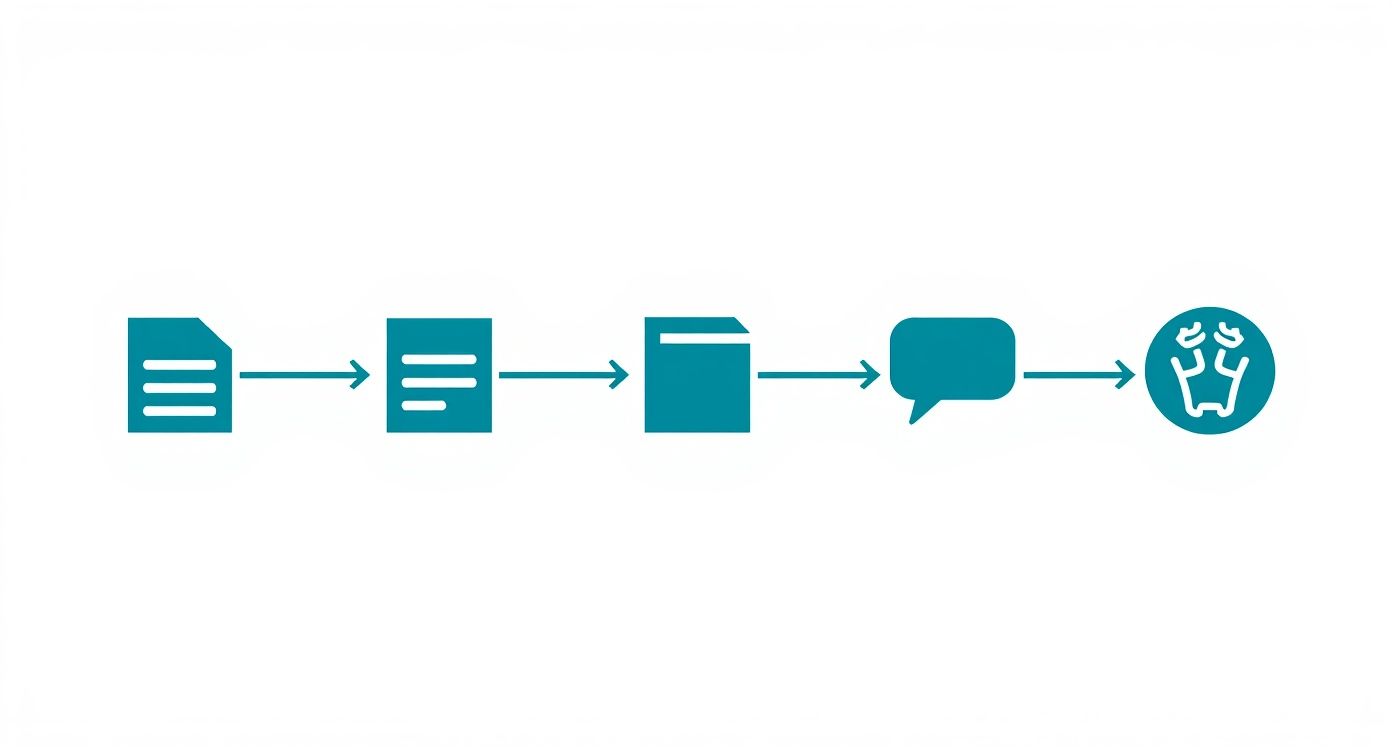
As you can see, the clues are everywhere—from structured content like blogs and help docs to unstructured conversations on platforms like Reddit. It's all about capturing the full spectrum of how real people talk.
Prioritizing Your Attack Plan
Once you have your clusters, you need to be strategic. You can't tackle everything at once. This is where you put on your general’s hat and decide which hills are actually worth taking.
I use a simple three-part framework to decide what to go after first:
- Relevance (The "Does it Matter?" Test): How closely does this cluster align with what you actually sell? A keyword like "free project management templates" might get tons of searches, but if you sell premium software, it's likely to attract people who will never buy. Prioritize keywords that signal someone is ready to pull out their wallet.
- Search Volume (The "Is Anyone Home?" Test): How many people are actually searching for this? All else being equal, a keyword with 1,000 monthly searches is a better bet than one with 10. There are plenty of the best free keyword research tools that can help you get this data and expand on your initial findings.
- Difficulty (The "Can I Win?" Test): How hard will it be to actually rank for this? If your main competitor is a giant brand like HubSpot, going head-to-head on a broad term like "CRM software" is a fool's errand. Look for keywords where the top results are from sites with similar authority to yours.
> Your sweet spot is a keyword cluster with high relevance, decent volume, and manageable difficulty. This is your "low-hanging fruit"—the place to focus your energy for the quickest wins.
And things are changing fast. The rise of AI in search means over 58% of Google searches result in zero clicks. SEOs now have to focus on queries that trigger featured snippets and AI Overviews. As AI assistants start handling an estimated 52% of U.S. queries, monitoring the conversational keywords your competitors are using becomes absolutely crucial.
Building Your Content Roadmap
With your prioritized clusters in hand, you can finally build a real content roadmap. This isn't some complex Gantt chart; it's a simple plan for what you're going to create and when.
Your roadmap should map each keyword cluster to a specific type of content:
- Big, broad topics become Pillar Pages. Think of these as your long, in-depth guides that cover a subject from A to Z.
- Specific, long-tail keywords within that topic become Supporting Blog Posts. These are articles that dive deep into one specific sub-topic and link back up to the main pillar page.
This "hub-and-spoke" model is incredibly effective. It organizes your site, helps users find exactly what they need, and signals your expertise to search engines. You're no longer just publishing random posts; you're building a library of interconnected, authoritative content that systematically siphons traffic right from under your competitors' noses.
A Few Common Questions About Competitor Keyword Research
Alright, let's tackle some of the nagging questions that pop up when you start this whole digital espionage thing. It’s one thing to have the tools and tactics; it's another to know how to handle the weird, real-world situations that inevitably come up.
Think of this as the rapid-fire round where we clear up the common "but what if..." scenarios so you can get back to smartly swiping keyword ideas.
How Often Should I Actually Be Doing This?
This is a great question, and the answer isn't "every day." Honestly, you'll drive yourself nuts. For most businesses, a deep dive into your competitors' keywords once a quarter is the perfect cadence.
This is frequent enough to catch new trends, product launches, or shifts in their content strategy, but not so often that you're just staring at the same data over and over again.
My advice? Set a recurring calendar reminder for the start of each quarter. That’s your dedicated "spy day" to see what your rivals have been up to. This keeps it from becoming an obsessive, time-sucking habit.
What if My Competitor Is a Giga-Brand?
So, you're a local coffee shop, and your top competitor is Starbucks. What on earth do you do? Trying to outrank them for a term like "coffee" is a fool's errand. You'll lose. Badly.
Instead of going head-to-head, you need to get hyper-specific. This is where you lean into low-competition keywords. These are the phrases the big brands often ignore because the search volume isn't massive, but they can be incredibly valuable for smaller players.
> Don't fight a battle you can't win. Instead of targeting their strongest keywords, find the niche, long-tail phrases they've completely overlooked. Think "best single-origin espresso beans Austin" instead of "best coffee."
Look for the gaps in their armor. Big brands are often slow to react to local trends or super-niche customer needs. That's your opening.
Is This Whole Thing Even Legal?
Let's clear this up right away: yes, it's 100% legal and ethical. You're not hacking into their servers or stealing their customer list. All the data you're accessing is publicly available information.
Tools like Ahrefs, Semrush, or the more affordable Already.dev simply organize this public data in a useful way. They crawl the web just like Google does and report on what they find.
Think of it like walking past a competitor's store and noticing they have a big "50% Off" sign in the window. You're just observing their public marketing strategy to inform your own. This is standard practice, and every smart business on the planet does it.
Can I Just Copy Their Keywords and Call It a Day?
Please, please don't do this. While finding the keywords your competitors are using is a massive shortcut, simply copying their list and trying to rank for the exact same things is a recipe for failure.
Why? Because you're not them. You have a different brand voice, different strengths, and a different relationship with your audience.
Use their keywords as a starting point—an inspiration list. Your job is to take those ideas and create something better, more specific, or more helpful than what they've made. Find the topic, then find a unique angle that makes your content stand out. That's how you truly win.
Ready to stop guessing and start seeing exactly what your competitors are doing? Already.dev gives you the intel you need to build a smarter strategy in minutes, not weeks. Start your research today at https://already.dev.