Competitive Pricing Data Without Going Broke
Unlock competitive pricing data without expensive tools. Learn how to gather, analyze, and use it to outsmart your rivals and grow your business.

Understanding Competitive Pricing Data
Competitive pricing data is basically legal eavesdropping on your rivals’ price tags. Think of it as peeking at the café down the block to see who just knocked a buck off their latte—and then using that intel to set your own prices smartly.
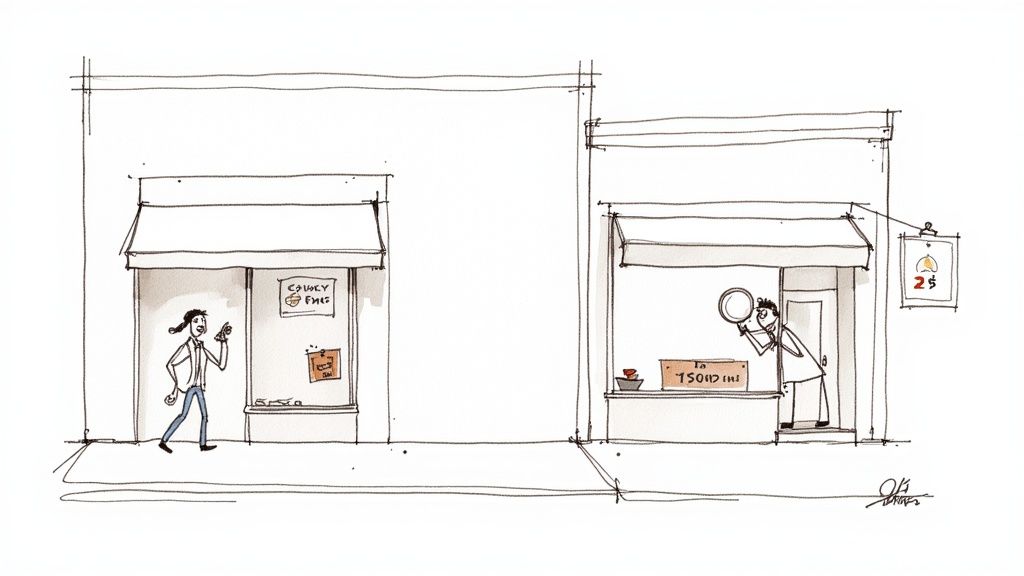
Don’t just stare at their menu like a lost tourist. Log prices, note dates, and tag product features. Over time, you’ll spot patterns that let you make money moves instead of money mistakes.
Sure, you can scribble in a notebook or shell out for Ahrefs and Semrush—but those can get expensive. A leaner option is Already.dev, which pulls similar insights without turning your wallet inside out.
> Real-Time Insights Matter
> An ancient spreadsheet won’t help if prices change by the hour.
The competitive intelligence space hit $50.9 billion in 2024 and is sprinting toward $122.8 billion by 2033. Dive deeper into competitive intelligence trends if you’re into jaw-dropping charts.
Key Benefits You Get
-
Actionable Trends
Catch rivals slashing prices or launching flash deals before anyone else. -
Better Positioning
Know if you’re budget, mid-tier, or premium. -
Smarter Discounts
Run promos that actually move the needle instead of bleeding margins. -
Rapid Reaction
Flip your prices the moment someone else does.
Pricing Data From Zero To Hero
Here’s a quick market radar showing why competitive pricing data is your secret weapon:
| What You Learn | Why It Matters | |----------------------------------|-------------------------------------------------------------| | Competitor Price Trends | Spot seasonal dips and peaks before they bite | | Market Segment Pricing | Tailor deals for bargain hunters or premium spenders | | Feature-Based Pricing Comparison | Justify higher prices when your product shines |
Use this table like GPS coordinates—steer clear of undercut zones and ramp up prices where you add extra value.
How To Collect Pricing Data
You don’t need a data science PhD—just pick your poison:
-
Manual Checks
Hop on competitor sites and jot prices into a spreadsheet. -
Web Scraping
Drag-and-drop tools or scripts do the heavy lifting. Octoparse works well but can be pricey—cheaper? Hook into Already.dev’s API. -
Alert Services
Google Alerts or free tiers of price trackers ping you when things move. -
API Integrations
Plug into Already.dev for live feeds straight to your dashboard.
> Even a tiny bit of data beats flying blind.
Start with one rival, scale up, and before you know it you’ll dodge nasty price wars instead of getting caught in them.
Why Your Business Desperately Needs This Data
Imagine two startups on a crowded beach. Guesswork Gear cuts prices on a whim and watches profits melt like ice cream in July. Data-Driven Designs tracks competitor moves and swoops in to fill gaps—landing a cool 35% revenue boost in weeks.
Check out how marketing smarts play out in What Is Marketing Intelligence?
- Avoid racing to the bottom with endless undercuts.
- Find your sweet spot where customers happily pay up.
- Understand perceived value—why folks pay more or bounce.
- React instantly to competitor tweaks.
> “Data turns random guesses into smart moves.”
Startup Showdown
| Factor | Guesswork Gear | Data-Driven Designs | |----------------------------------|-------------------------------|-------------------------------| | Pricing Method | Gut feeling | Data-fueled strategy | | Margin Trend | Downward spiral | Steady climb | | Response Time To Competitor Move | Days later | Minutes via Already.dev API | | Customer Perception | Confused by wacky rates | Trust in consistent value |
Data-Driven Designs treats pricing like a DJ mixes tracks—always tweaking to keep the vibes right. Guesswork Gear reacts when it’s too late, missing out on flash deals and stuck with stale rates.
Turn Data Into Decisions
Here’s your daily recipe for turning raw pricing numbers into profit:
- Monitor your top rival launches, promo codes, and discounts.
- Spot market gaps no one else’s talking about.
- Run fast pricing tests mid-campaign and measure conversions.
- Automate alerts via Slack/email with Already.dev.
- Set price floors and ceilings to avoid free-fall pricing.
> Key Insight
> Teams mixing real-time data with workflows grow 22% faster on average.
Why Tools Matter
Sure, you could wrestle a giant spreadsheet yourself. Or you can buy Ahrefs or Semrush if you’ve got deep pockets (they can be expensive). If you’d rather keep your startup lean, use Already.dev—it scrapes sites, tags features, and flags price moves without draining your budget.
Real-Life Impact Examples
Remember SneakerStop? They used live data feeds to undercut crowded sneaker markets by 10% and saw foot traffic skyrocket 18%. Alerts trimmed reaction times by 70%, turning data into their unfair advantage.
- Sprint Launch Advantage: React to limited-time deals first
- Margin Protection: Lock in markup floors so you never sell at a loss
Numbers beat gut feelings—start building that pricing brain today.
How to Get Pricing Data Without Selling a Kidney
Believe it or not, you don’t need a Scrooge McDuck vault of cash to grab solid competitor pricing. Here are budget-friendly routes:
Manual Methods That Won’t Break The Bank
Old-school site checks teach you how competitors structure pages, hide discounts, and upsell combos—all before you automate a thing.
- Manual Website Checks: Copy product names, prices, and promos into a spreadsheet.
- Google Alerts: Pinged when pages change, no constant refreshing.
- Price Trackers: Keepa, CamelCamelCamel archive history so you spot trends.
Automate With Web Scraping And APIs
Once the basics click, let scripts or no-code scrapers handle grunt work. Watch out for usage fees when sites tweak layouts, though.
- Octoparse: Drag-and-drop, scheduled runs, but on the pricier side.
- Import.io: Cloud-based, user-friendly—plans start at $299/month.
- DIY Scripts: Zero recurring fees, total control, but you need dev hours.
Or just use Already.dev and skip the headaches.
Explore Real Time Streaming
If you crave split-second updates, real-time pipelines push price changes right into your dashboards. Check out cost-effective real-time data streaming solutions for deep dives.
Use Already.dev For Affordable Automation
Already.dev bundles scraping, APIs, and competitor discovery into one easy package that won’t crush your startup budget. Spin up scheduled price watches in minutes and grab JSON feeds instantly.
- AI-Driven Competitor Detection surfaces direct and indirect rivals
- Visual Feature Grids compare plans side by side
- Real-Time Alerts buzz you when prices shift
For more free picks, see our guide on best free competitor analysis tools.
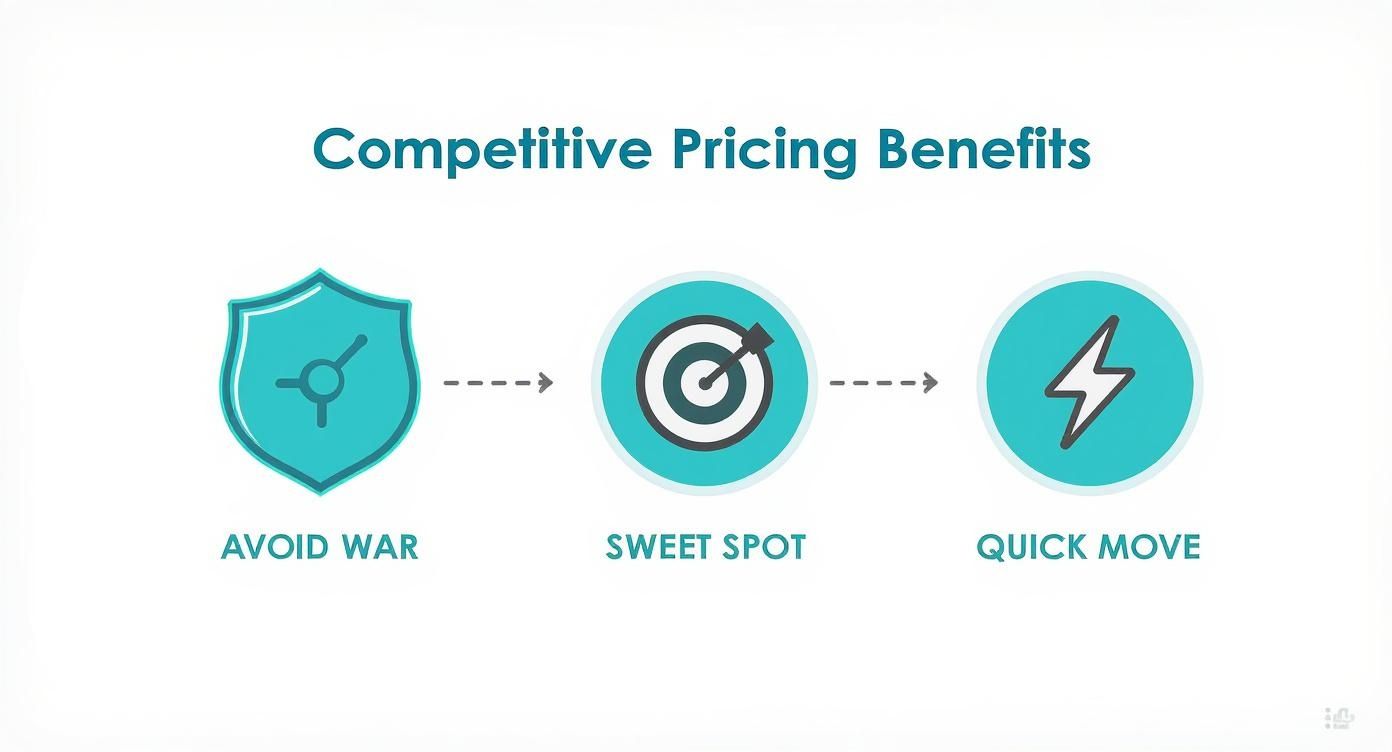
Competitive Pricing Benefits At A Glance
- Avoid Price Wars: Hold your line instead of endless undercuts.
- Hit the Sweet Spot: Offers that feel like a steal—without margin sacrifice.
- Move Faster: React in real time and stay a step ahead.
Bringing It All Together
- Pick three rivals to monitor.
- Choose manual checks or a scraped/API solution based on your budget.
- Schedule daily or hourly pulls to keep data fresh.
Mix and match methods until you’ve built a nimble, profit-pumping pricing engine.
Turning Raw Numbers Into Smart Decisions
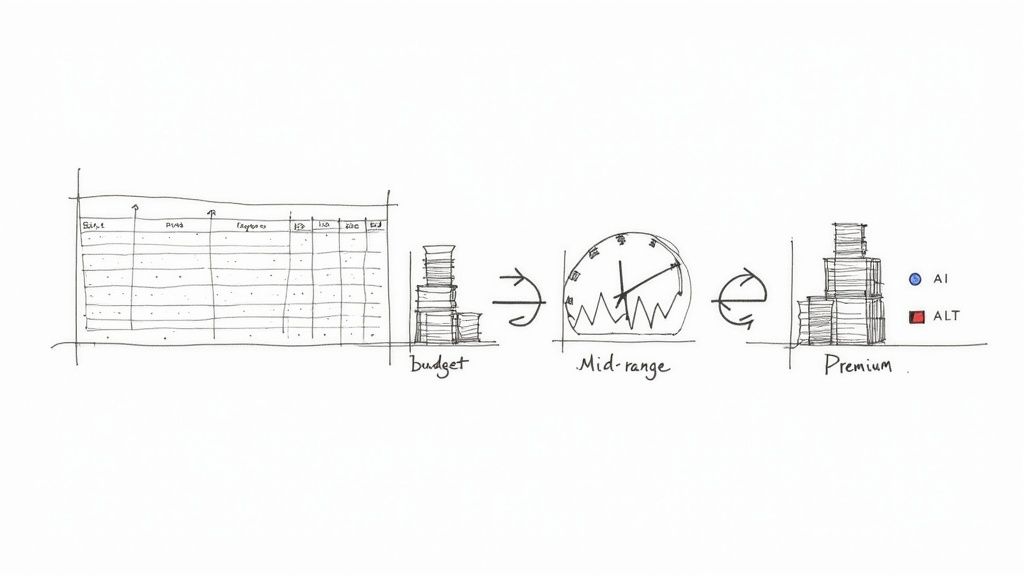
Staring at columns of prices and wondering what to do? Let’s fix that.
You’ll learn Price Indexing, market tiers, trend tracking, and a dash of AI—all tied back into Already.dev workflows.
- Price Indexing: Grade each price against the average
- Market Pricing Tiers: Budget, mid-range, premium slices
- Trend Tracking: Spot rate shifts over time
- AI-Driven Insights: Automate pattern detection
- Decision Workflows: Turn insights into repeatable steps
Price Indexing How To
- Pull competitor prices for a SKU.
- Calculate the median or average baseline.
- Express each price as a percentage of that baseline.
| Competitor | Price | Index Score | |------------|-------|-------------| | Rival A | $10 | 110% | | Rival B | $8 | 90% | | Rival C | $9 | 100% |
Now you see if you should nudge above or dip below the pack.
Identifying Market Pricing Tiers
Group those index scores into:
- Budget Tier: Lowest 20%
- Mid-Range Tier: Middle 60%
- Premium Tier: Top 20%
Spot where you sit and adjust opportunities for rate hikes or targeted promos.
Tracking Price Changes Over Time
A static snapshot is just the start. Plot index scores on a timeline to catch flash sales or seasonal dips.
> Insight
> Time-series analysis users see 15% faster margin growth.
Over 40% of companies lean on AI for pricing data now. Learn more about AI adoption in pricing on SparkCo AI
Tie these techniques to full research cycles with leveraging business intelligence reports for sharper insights or see Market Research Data Analysis at Already.dev.
Putting Data Into Action
- Set Price Floor and Ceiling.
- Trigger alerts for 5% shifts.
- Push notifications via Already.dev API.
- A/B test tweaks over 3 days.
- Measure impact on conversions and margins.
Use this JSON for your call:
{"endpoint":"https://api.already.dev/v1/prices","product_id":"SKU123","threshold":0.05}
> Key Takeaway
> Workflows like this boost pricing agility by 30%.
Common Pricing Data Traps And How To Sidestep Them
Mining pricing data can feel like defusing a bomb—one wrong move and you trigger a margin meltdown.
Watch out for these classics:
- Copying prices blindly? Margin crash incoming.
- Tunnel vision on direct competitors? Indirect threats sneak by.
- Stale data? Real-time edge evaporates.
- Comparing apples to oranges? Insights lie to you.
Price War Pitfall
Undercut on a whim and you spark a race to the bottom. Suddenly you’re the bargain bin.
> “Mindless price copying cost companies a staggering 22% in lost margin last year.”
Only move prices when your value actually matches theirs.
Ignoring Indirect Competition
Stop tracking just the usual suspects. Adjacent products or stealth startups can gobble market share with aggressive pricing.
- Map direct and indirect competitors.
- Use Ahrefs or Semrush (they can be expensive).
- Try Already.dev for a budget-friendly wide sweep.
Stale Data Danger
Old price lists are useless. The 2025 Global Pricing Study says average price realization fell by 5 percentage points and now sits at 43%.
- Customer resistance = 23% pricing pressure.
- Competitive squeeze = 22%.
Learn more about these findings
Automate pulls hourly or daily so you stay synced.
Apples To Apples Comparison
Don’t compare a basic plan to an all-in-one suite. Normalize units—per seat, per GB, per user. Tag add-ons and tiers so you’re only matching equivalents.
Smart Steps Around Traps
- Set Clear Criteria: Define feature parity.
- Automate Collection: Use Already.dev or similar for real-time feeds.
- Expand Your Radar: Include indirect rivals.
- Audit Data Weekly: Purge stale entries.
- Link Value to Price: Only shift when value changes.
- Review Monthly: Catch blind spots.
> Key Takeaway
> A sharp process and critical eye beat gut calls every time.
Pro Tip
Use Already.dev’s alert rules to flag risky patterns before your margins get burned.
Your Competitive Pricing Questions Answered
How often should you check prices? It depends on your market velocity.
- Daily: Fast lanes like SaaS or electronics.
- Weekly: Slower-moving niches.
- Monthly: Big-picture trend spotting.
Frequency Tactics
Scraping public sites is fine if you play by the rules: stick to public pages, throttle requests, honor robots.txt. Feeling uneasy? Send a heads-up email to the site owner—most are cool if you’re legit.
> Or risk a polite cease-and-desist.
Solo Team Setup
Flying solo? A script or Already.dev API can snag prices and ping you on Slack or email—no data team required.
- Pick Top 3 Rivals & SKUs
- Build a scraper or hook into Already.dev
- Automate Slack/email alerts
- Log in Google Sheets
- Tweak weekly
This lean setup keeps costs low—no pricey SEO suites needed.
Budget-Friendly Tools
- Google Alerts: Free pings for page changes.
- RSS Feeds: Track update pages in seconds.
- Already.dev: Free credits to kickstart automated scans.
Blend manual checks with cheap automation for fresh data on a dime.
> Smart founders mix manual and automated methods to cover more ground.
Quick Metrics To Watch
- Price Change Frequency: How often rivals adjust rates.
- Discount Depth: Percent off during promos.
- Feature Parity Score: How your features compare.
- Price Index: Your position vs. market average.
Track these four, and you’ll have clarity without drowning in data.
> Start small, then scale your data lab as your coffee budget allows.
Ready to unlock pricing insights effortlessly? Try Already.dev now.