12 best tools for product managers in 2025
Discover the best tools for product managers in 2025—top picks to streamline roadmaps, collaboration, and analytics. Click to see our expert shortlist.
Let's be real. Your product manager tech stack is a chaotic mess of spreadsheets, slide decks, and a dozen SaaS subscriptions you forgot you had. You're supposed to be the voice of the customer, the master of the roadmap, and a strategic genius—not a professional tab-switcher. We get it. This isn't another boring, AI-generated list of 'top tools.' This is a no-BS guide to the actual best tools for product managers who need to ship great products without losing their minds.
We'll break down the essentials you actually need to build a coherent, powerful toolkit. Forget the fluff; we're diving straight into the platforms that solve real problems, from wrangling a chaotic roadmap in Productboard to understanding why users are rage-clicking your checkout button with Amplitude. We'll even cover competitive research, where tools like Ahrefs and Semrush can get crazy expensive, and show you how alternatives like https://already.dev can deliver powerful insights without obliterating your budget.
To truly understand your users and market, it's crucial to explore various B2B SaaS social listening tools that can provide valuable insights beyond traditional feedback channels. This guide is your shortcut to building a stack that actually works instead of just draining your budget.
Inside, you'll find:
- Honest Reviews: Real talk about what each tool does well and where it falls short.
- Clear Use Cases: Who is this tool really for? Startups? Enterprise teams? We'll tell you.
- Pricing Breakdowns: A simple look at the costs, so you know what you’re getting into.
- Screenshots & Links: See the tools in action and jump directly to what you need.
Let's cut through the noise and find the right software to help you build better products, faster.
1. Already.dev
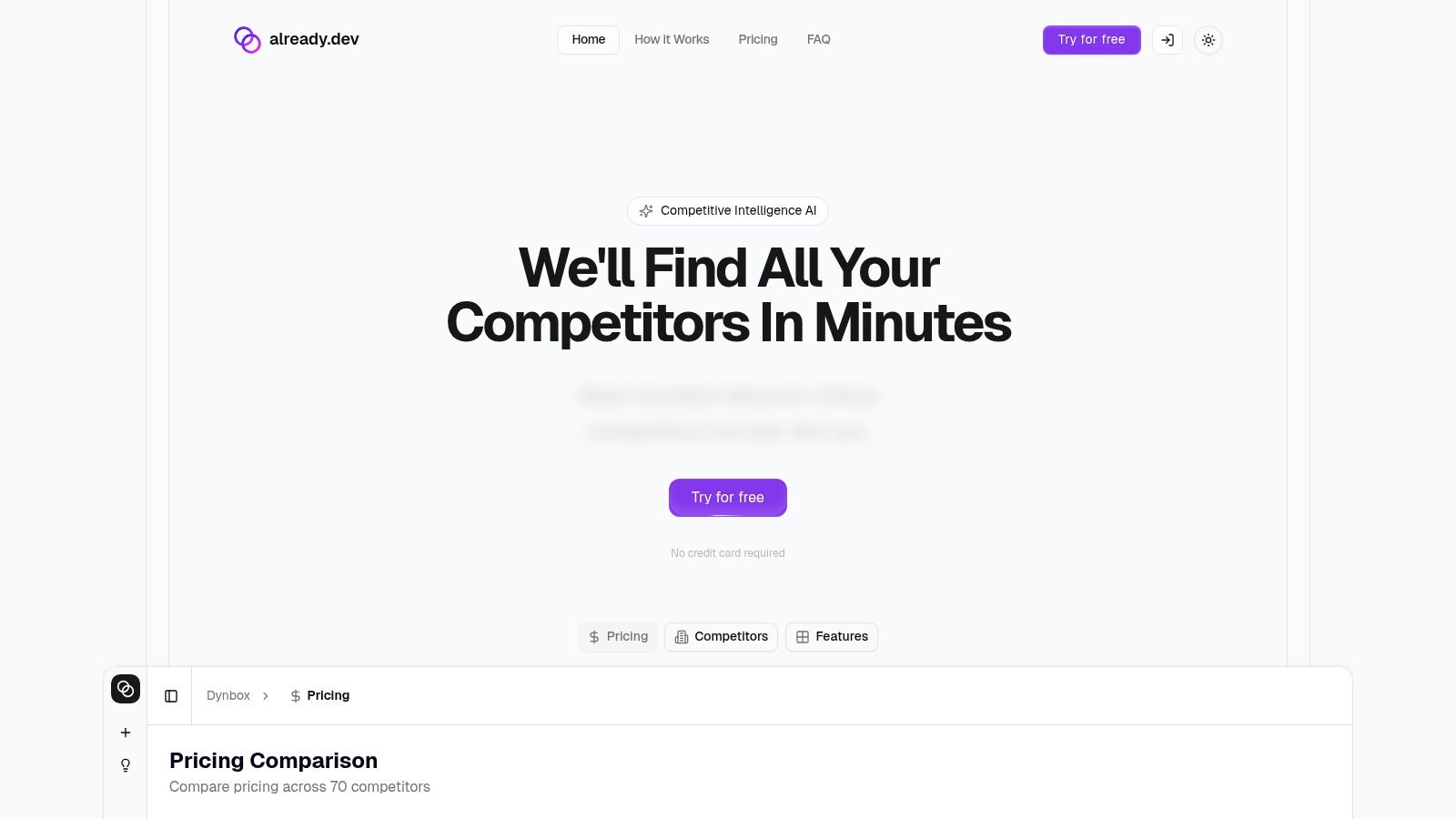
When it comes to competitive research, most product managers are stuck between a rock and a hard place. You can either spend 40+ hours manually digging through Google, Reddit, and app stores, or you can drop a small fortune on expensive enterprise tools like Ahrefs that are complex and overkill for validating a single idea. Already.dev offers a powerful third option: AI-driven competitive intelligence that delivers deep insights in about four minutes. It’s a game-changer and a standout choice among the best tools for product managers who need to move fast without flying blind.
You simply describe your product idea in plain English, and its AI agent gets to work. It builds a custom research plan and scours hundreds of sources far beyond a typical Google search, including GitHub, Product Hunt, niche forums, and startup directories.
Why It's Our Top Pick
Already.dev doesn’t just give you a list of links; it synthesizes the data into actionable reports. You get visual feature grids, pricing comparisons, and even intelligence on what real search keywords your potential customers are using. One of its most valuable features is its ability to uncover "failed attempts," letting you learn from the mistakes of startups that have already tried and failed in your space. This insight alone can save you hundreds of thousands in wasted development costs.
> "Instead of guessing what’s out there...Already.dev gives you a defensible, data-driven competitive picture quickly—so you can stay customer-obsessed while being fully aware of market risks and whitespace."
Key Features & Use Cases
- Deep, Multi-Source Crawls: Finds direct, indirect, and hidden international competitors that manual research almost always misses.
- Actionable Visual Outputs: Instantly generates feature and pricing comparisons to sharpen your positioning and GTM strategy.
- Failed Startup Detection: Provides historical context on what didn't work for others, helping you de-risk your roadmap.
- Ongoing Monitoring: Set up alerts for new competitors and get social listening insights to spot trending customer complaints and feature gaps.
Pros & Cons
| Pros | Cons | | -------------------------------------------------------------------------------------------------------------------------- | ----------------------------------------------------------------------------------------------------- | | Extremely fast: Replaces weeks of manual work with ~4 minutes of automated analysis. | Cost per report can add up for heavy, continuous use. | | Deep coverage: Searches far beyond Google to surface competitors you'd otherwise miss. | API access and some advanced team integrations are still 'coming soon'. | | Actionable outputs: Provides feature grids, pricing comparisons, and AI chat over the data for instant decision-making. | Still requires human validation, especially for stealth-mode or highly private competitors. | | Flexible pricing: A free first search, and credits that never expire make it accessible. | |
Pricing
Already.dev uses a flexible, credit-based model. You can run your first search for free without a credit card. After that, you can buy a single report for around $93 or get a "Founder Pack" of 10 reports for about $191. There are larger packs for teams that need more volume.
Website: https://already.dev
2. Productboard
Productboard is a beast when it comes to connecting customer feedback directly to your product strategy. It’s designed to be the central nervous system for your product, pulling in user insights from places like Intercom, Zendesk, Slack, and email, then helping you figure out what to build next. If you’re tired of feedback living in a dozen different spreadsheets and Notion docs, this is your solution.
Its main superpower is the feedback-to-roadmap workflow. You can link specific pieces of customer feedback directly to feature ideas, giving your prioritization decisions real, quantifiable data. No more guessing games or building based on the "loudest voice in the room." This makes it one of the best tools for product managers focused on customer-centric development. For a sanity check, https://already.dev can also help you see what features your competitors are building.
Why It's a Top Pick
Productboard excels at creating a single source of truth. It offers flexible roadmaps you can tailor for different audiences, from a high-level strategic view for executives to a detailed feature timeline for the engineering team. The user interface is clean and intuitive, making it easy to get started.
> Best For: Product teams that need a robust, all-in-one system to centralize customer feedback, prioritize features with data, and communicate their roadmap effectively.
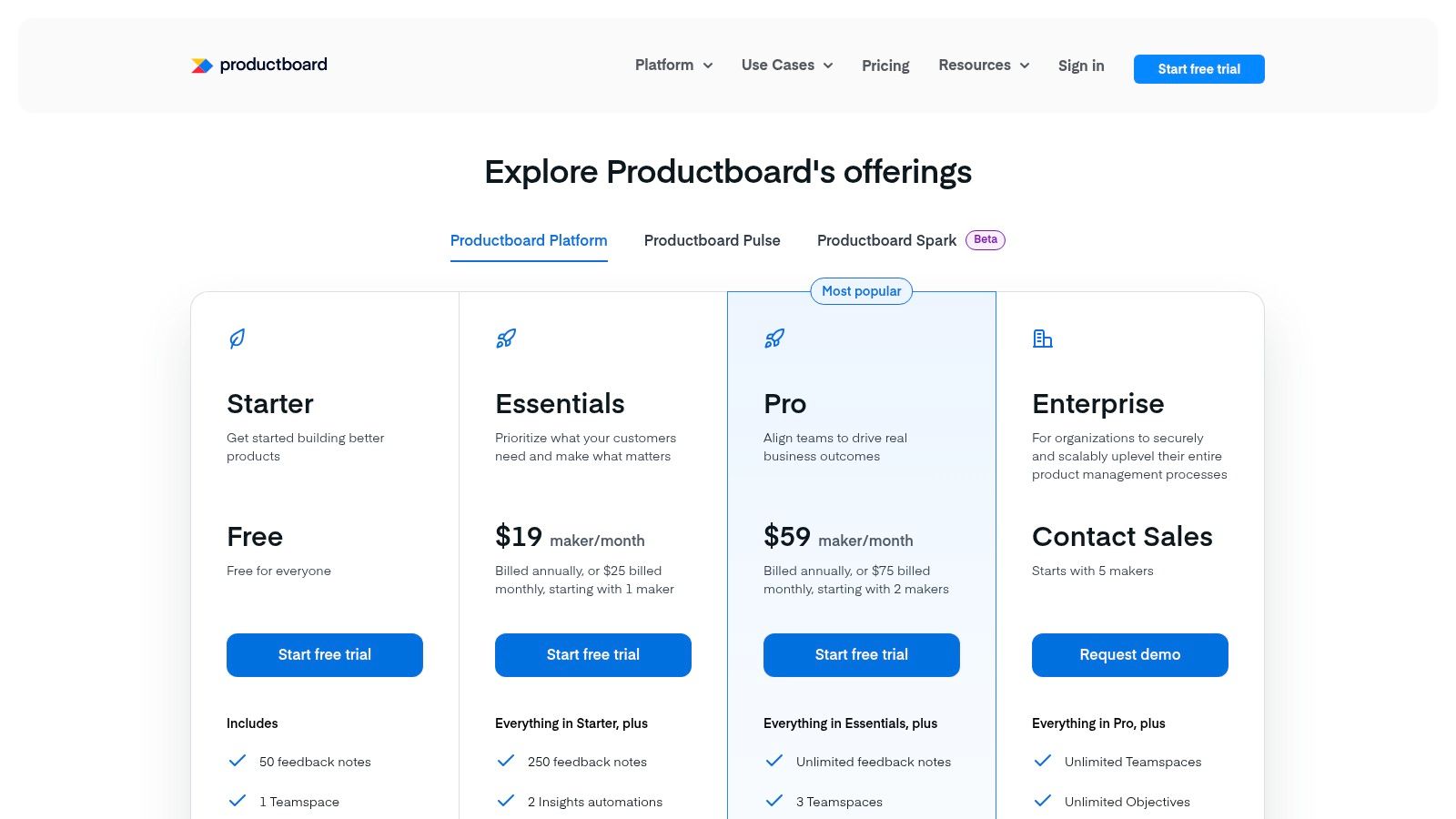
| Feature Highlights | Pricing Info | Key Consideration | | :--- | :--- | :--- | | Feedback Consolidation | Starts with a free Essentials plan. | The free plan limits you to one maker and 20 notes. | | Prioritization Frameworks | Pro plan is $60/maker/month. | Unlimited notes and contributors require the Pro plan or higher. | | Customizable Roadmaps | Scale & Enterprise plans offer custom pricing. | Getting an enterprise invoice requires a sales call, which can be a hassle. |
Practical Tip: Use the "Insights" section to tag and process all incoming feedback as it arrives. Create a weekly ritual to review new insights with your team to stay on top of customer needs and prevent a backlog from piling up.
Learn more at productboard.com
3. Aha! Roadmaps
Aha! Roadmaps is the enterprise-grade choice for product management, offering a comprehensive suite that links high-level strategy directly to daily execution. It goes beyond simple roadmapping to include idea management, whiteboarding, and sophisticated reporting. If you work in a large organization that needs tight alignment between business goals and engineering work, Aha! is built for you.
Its key strength lies in its structured, strategy-first approach. You define your goals and initiatives first, then link features and releases directly to them, ensuring every item on your roadmap has a clear strategic purpose. This makes it one of the best tools for product managers who need to justify their roadmap decisions to leadership and demonstrate business impact. A tool like https://already.dev can also help find the market data to back up those strategic decisions.
Why It's a Top Pick
Aha! excels at providing a complete, integrated system for the entire product development lifecycle. Its reporting features are incredibly powerful, allowing you to create custom presentations and dashboards that communicate progress to any stakeholder. The inclusion of an ideas portal with unlimited users in every plan is a massive bonus for gathering customer feedback at scale.
> Best For: Larger product teams and enterprise companies that require a robust, all-in-one platform for strategic planning, roadmapping, and detailed reporting.
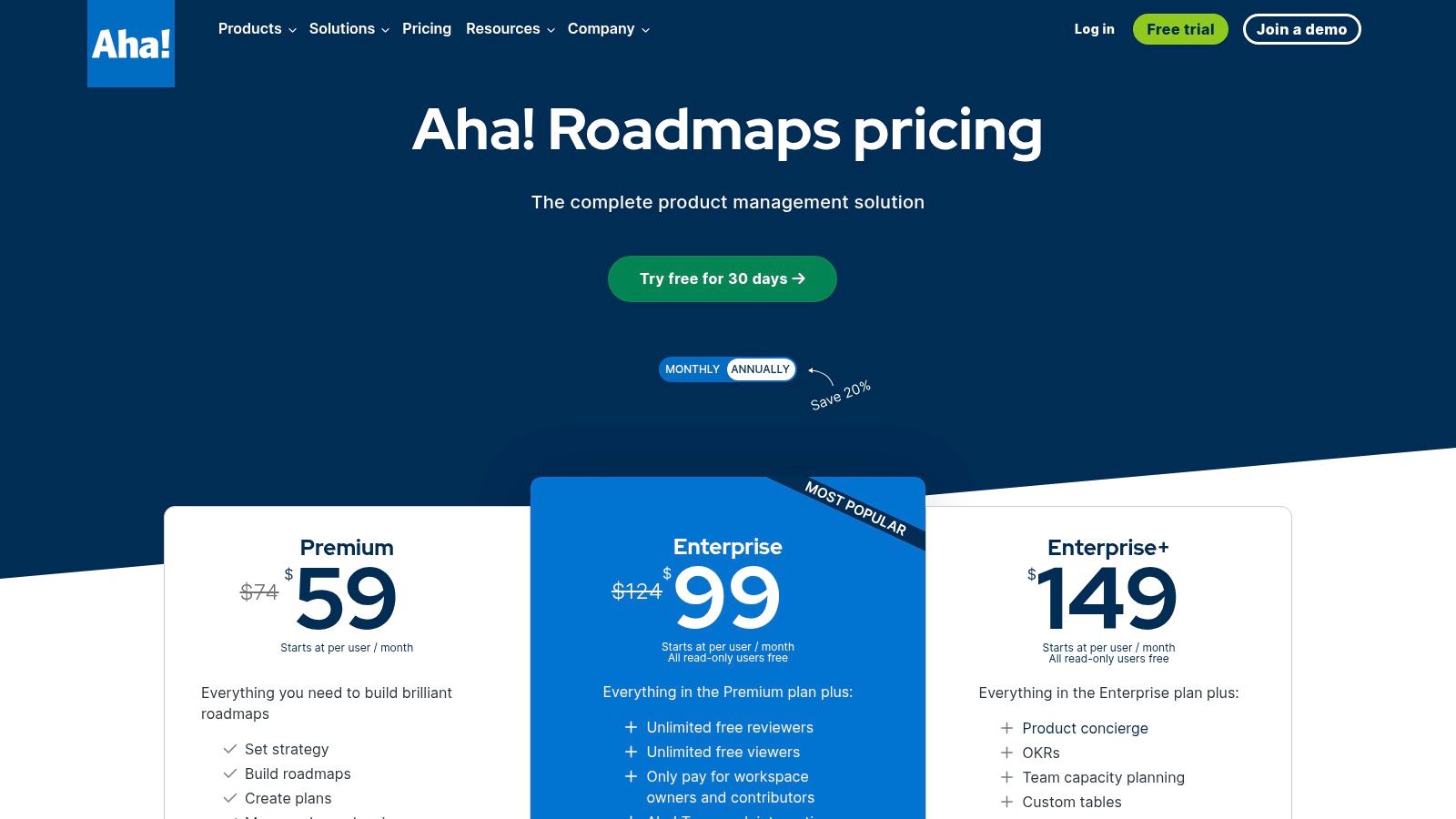
| Feature Highlights | Pricing Info | Key Consideration | | :--- | :--- | :--- | | Strategy-to-Delivery Workflows | Premium plan is $59/user/month. | The entry-level price is higher than many alternatives. | | Ideas Portals | Enterprise plan is $99/user/month. | The platform has a significant learning curve during initial setup. | | Advanced Reporting & Presentations | Enterprise+ plan is $149/user/month. | It can feel overly complex or bloated for smaller, more agile teams. |
Practical Tip: Start by filling out the "Strategy" section before you build any roadmaps. Defining your company's vision, goals, and initiatives first will make prioritizing features much easier and more logical within the Aha! framework. Learn more about crafting an effective product roadmap.
Learn more at aha.io
4. Jira Product Discovery (Atlassian)
If your team lives and breathes Jira, then Jira Product Discovery is a no-brainer. It’s Atlassian’s answer to connecting the messy, chaotic world of product discovery directly to the structured process of delivery. It's designed to capture ideas, prioritize them with data, and build roadmaps without ever leaving the ecosystem your engineers already call home. No more context switching or trying to sync a separate tool with your Jira backlog.
Its main advantage is that seamless integration. You can capture insights and ideas from anywhere, organize them within Discovery, and then, with a click, convert a validated idea into an epic or story in a Jira Software project. This direct link from "what if?" to "what's next?" makes it one of the best tools for product managers who want to reduce friction between discovery and development cycles. Of course, you still need to find those ideas, which is where a discovery tool like https://already.dev comes in.
Why It's a Top Pick
Jira Product Discovery excels at bringing order to the front end of the product development process while staying tightly coupled with the back end. It offers customizable views and fields, allowing you to create prioritization frameworks like RICE or WSJF right inside the tool. The "creator" and "contributor" roles also make it cost-effective to involve the entire organization in the ideation process without buying expensive licenses for everyone.
> Best For: Product teams already heavily invested in the Atlassian ecosystem who want a native solution for idea management, prioritization, and roadmapping.
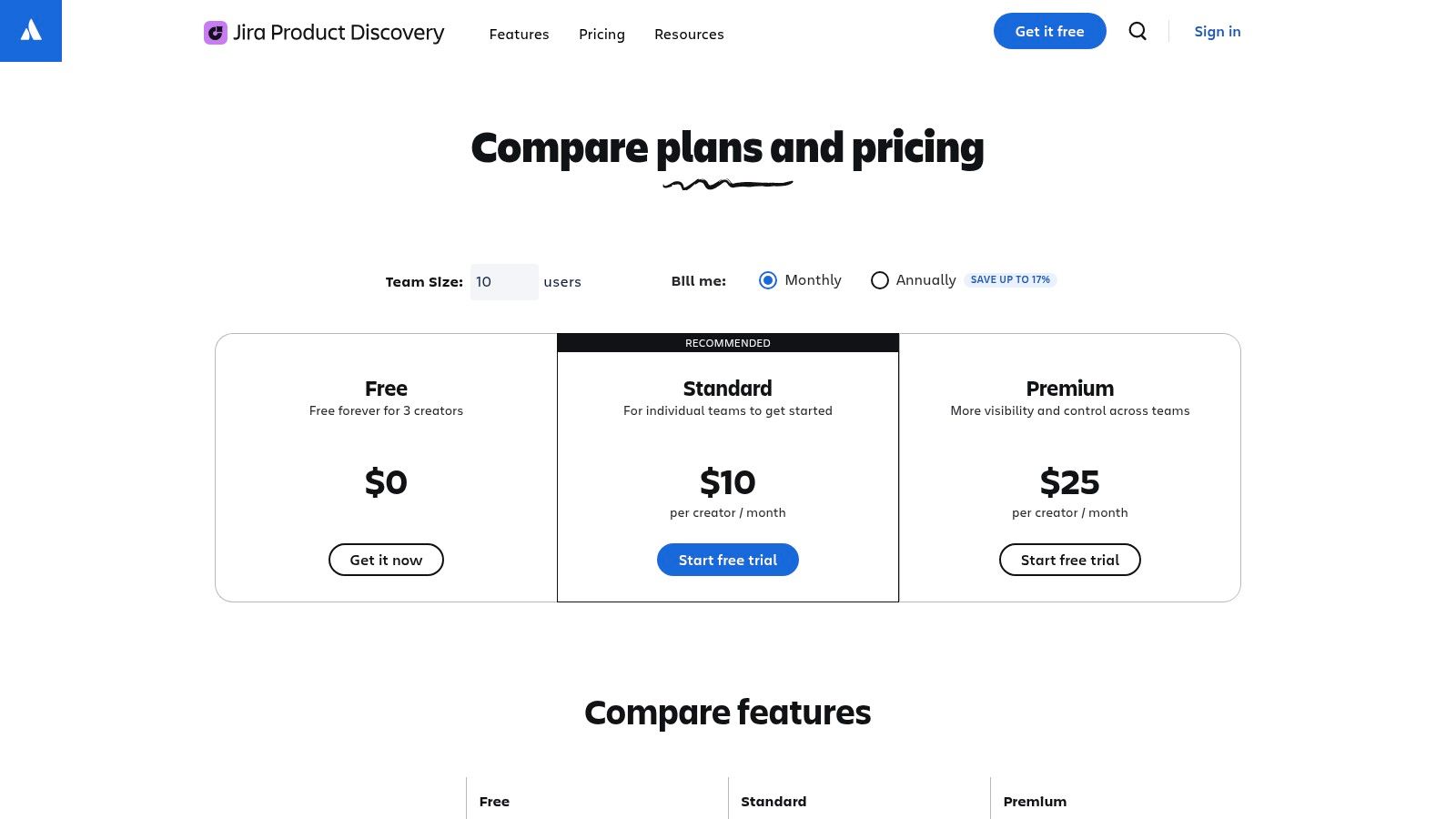
| Feature Highlights | Pricing Info | Key Consideration | | :--- | :--- | :--- | | Native Jira Integration | A Free plan is available for up to 3 creators. | The free plan is great for small teams but lacks advanced features. | | Customizable Views & Fields | The Standard plan is $10/creator/month. | Most teams will need the Standard plan for unlimited contributors. | | Prioritization Frameworks | A Premium plan with advanced features is available. | You get the most value when your engineering team is already on Jira Software. |
Practical Tip: Use the Chrome extension to capture ideas and feedback from anywhere on the web and send them directly to your "Ideas" view. This helps ensure that inspiration from customer calls, competitor sites, or Slack conversations doesn't get lost in the shuffle.
Learn more at atlassian.com
5. ProductPlan
ProductPlan is designed to do one thing and do it exceptionally well: create beautiful, easy-to-understand product roadmaps. If you're tired of fighting with clunky spreadsheets or overly complex project management tools to communicate your strategy, this is your dedicated solution. It’s all about creating clear, visual, and shareable roadmaps that everyone from the C-suite to the engineering team can actually understand.
Its main strength is its simplicity and focus. Instead of trying to be an all-in-one product management suite, it zeroes in on making the roadmapping process painless. You can quickly drag and drop initiatives, create different views for different audiences (like a timeline view for engineers and a theme-based view for executives), and connect your work to high-level strategic goals. This makes it one of the best tools for product managers who need to align their entire organization around a single, coherent vision. For populating that vision with solid data, https://already.dev is a great starting point.
Why It's a Top Pick
ProductPlan excels at turning complex plans into clean, professional-looking visuals without a steep learning curve. The platform is built around portfolio views, allowing leaders to see how multiple roadmaps roll up into broader company objectives. Its unlimited viewer model is a huge plus for large organizations, as you don't get nickel-and-dimed for every stakeholder who needs to see the plan.
> Best For: Larger teams and enterprises that need a standardized, easy-to-use tool for creating and sharing visual roadmaps across the entire organization without complex features.
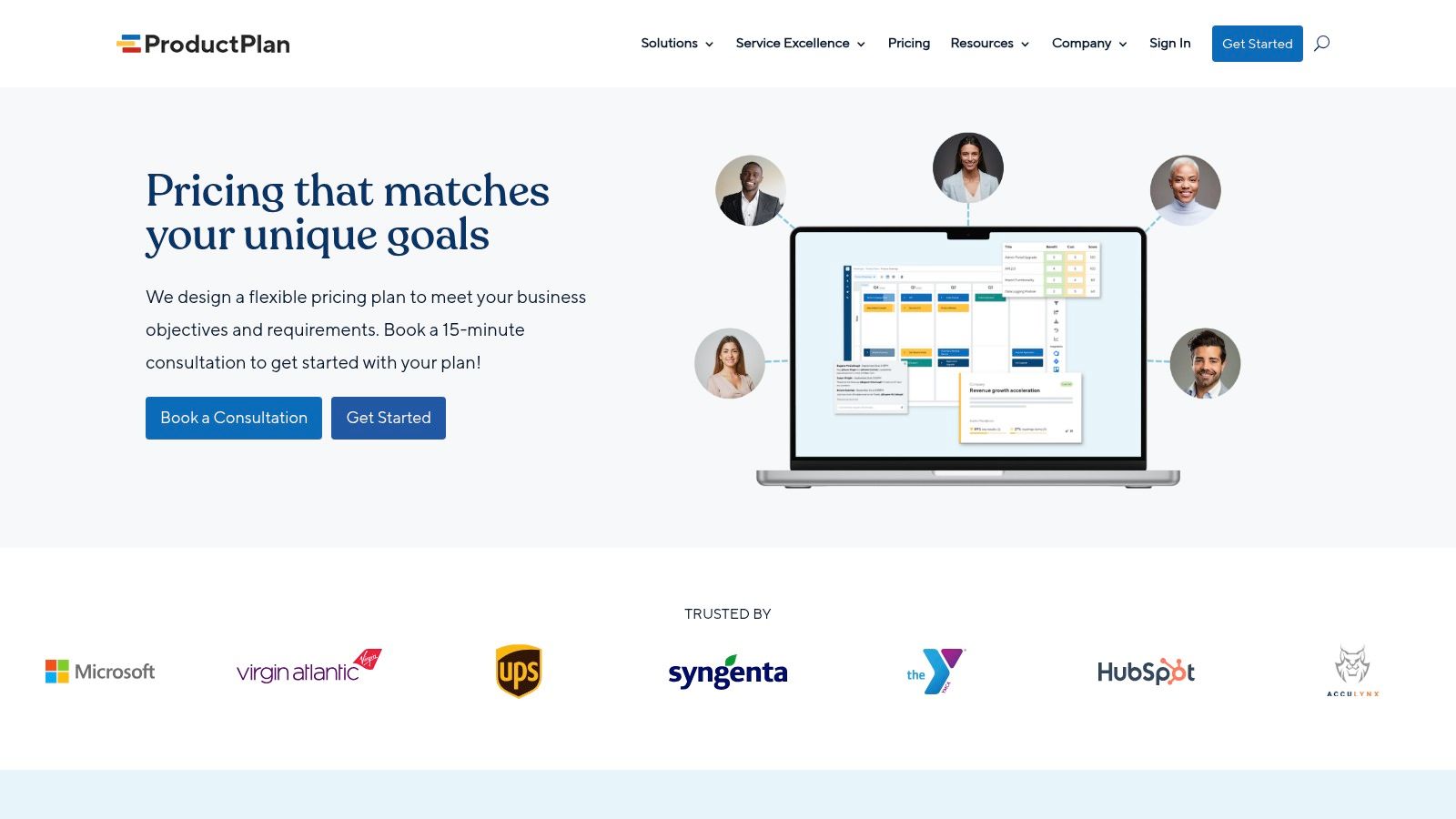
| Feature Highlights | Pricing Info | Key Consideration | | :--- | :--- | :--- | | Unlimited Roadmaps & Viewers | Pricing is not public; requires a consultation. | You must book a sales call to get a quote. | | Portfolio Views | Plans are sold on annual contracts only. | The lack of a self-serve free trial can slow down evaluation. | | Prioritization Board | Guided evaluation and onboarding are included. | It's purely a roadmapping tool; it doesn't manage feedback or tasks. |
Practical Tip: Use the "Portfolio View" to create a master roadmap that combines several individual product roadmaps. This is a game-changer for presenting a unified strategy to leadership and showing how all the pieces fit together.
Learn more at productplan.com
6. Strategic Roadmaps (Roadmunk by Tempo)
If your primary job is to create beautiful, boardroom-ready roadmaps that make stakeholders nod in approval, Strategic Roadmaps (formerly the well-loved Roadmunk) is your secret weapon. Acquired by Tempo, it specializes in turning complex plans into clean, visual timelines and swimlane views that are incredibly easy to share. It’s less of an all-in-one product management suite and more of a focused tool for brilliant roadmap communication.
Its main strength lies in its presentation layer. You can pivot your data to create different roadmap views for different audiences without redoing any work. One click gets you a high-level strategic timeline for execs, and another gives you a more granular, themed view for your quarterly planning session. This makes it one of the best tools for product managers who need to align entire organizations around a single vision. You can feed that vision with insights from a tool like https://already.dev.
Why It's a Top Pick
Strategic Roadmaps excels at making roadmapping accessible and visually stunning. It includes idea and feedback management modules to connect strategy to customer needs, and its integrations with Jira and Azure DevOps keep plans synced with development work. The generous inclusion of "reviewer" licenses means you can share your plans widely without racking up huge costs.
> Best For: PMs and product leaders who prioritize clear, compelling roadmap visualization and need to align executives, stakeholders, and the broader company.
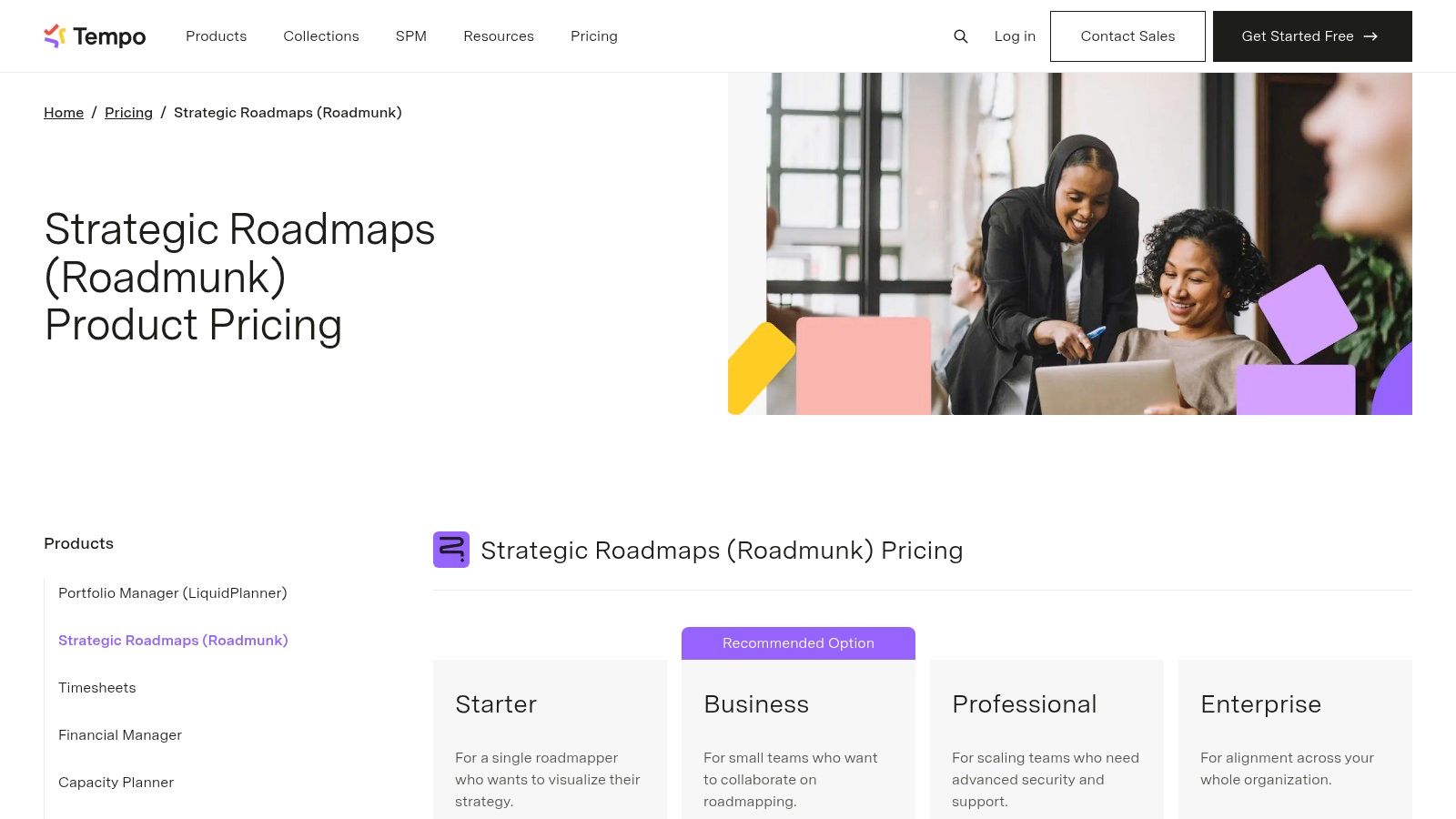
| Feature Highlights | Pricing Info | Key Consideration | | :--- | :--- | :--- | | Timeline & Swimlane Roadmaps | Starter plan is $19/user/month. | Standard plans are billed annually, which requires a bigger upfront commitment. | | Idea & Feedback Management | Business plan is $49/user/month. | You need the Business plan for integrations like Jira and Azure DevOps. | | Included Reviewer Licenses | Professional & Enterprise plans offer custom pricing. | Advanced security features like SSO are locked behind the most expensive tiers. |
Practical Tip: Use the "master" roadmap feature to combine several individual product or team roadmaps into one portfolio-level view. This is a game-changer for presenting a unified company strategy to leadership without getting lost in the weeds.
Learn more at roadmunk.com
7. Amplitude
Amplitude is the gold standard for understanding user behavior inside your product. It’s a powerful analytics platform that goes beyond simple page views to show you exactly what users are doing, which features they love, and where they get stuck. If you're flying blind on product adoption and engagement metrics, Amplitude turns the lights on, letting you connect feature launches directly to user impact.
Its real magic lies in its ability to answer complex product questions without needing to write a single line of SQL. You can build funnels, retention charts, and user cohorts on the fly to validate hypotheses and measure the success of your experiments. This makes it one of the best tools for product managers who need to make data-informed decisions quickly and confidently. You can complement this internal user data with external market data from a tool like https://already.dev.
Why It's a Top Pick
Amplitude offers a comprehensive suite that combines product analytics with experimentation, feature flagging, and session replays. This integrated approach means you can analyze behavior, test a new feature with a specific user segment, and watch recordings of how they interact with it, all within one platform. The interface is clean and surprisingly user-friendly for how much power is under the hood.
> Best For: Data-driven product teams, especially in PLG companies, who need to deeply understand user behavior, validate feature impact, and run A/B tests.
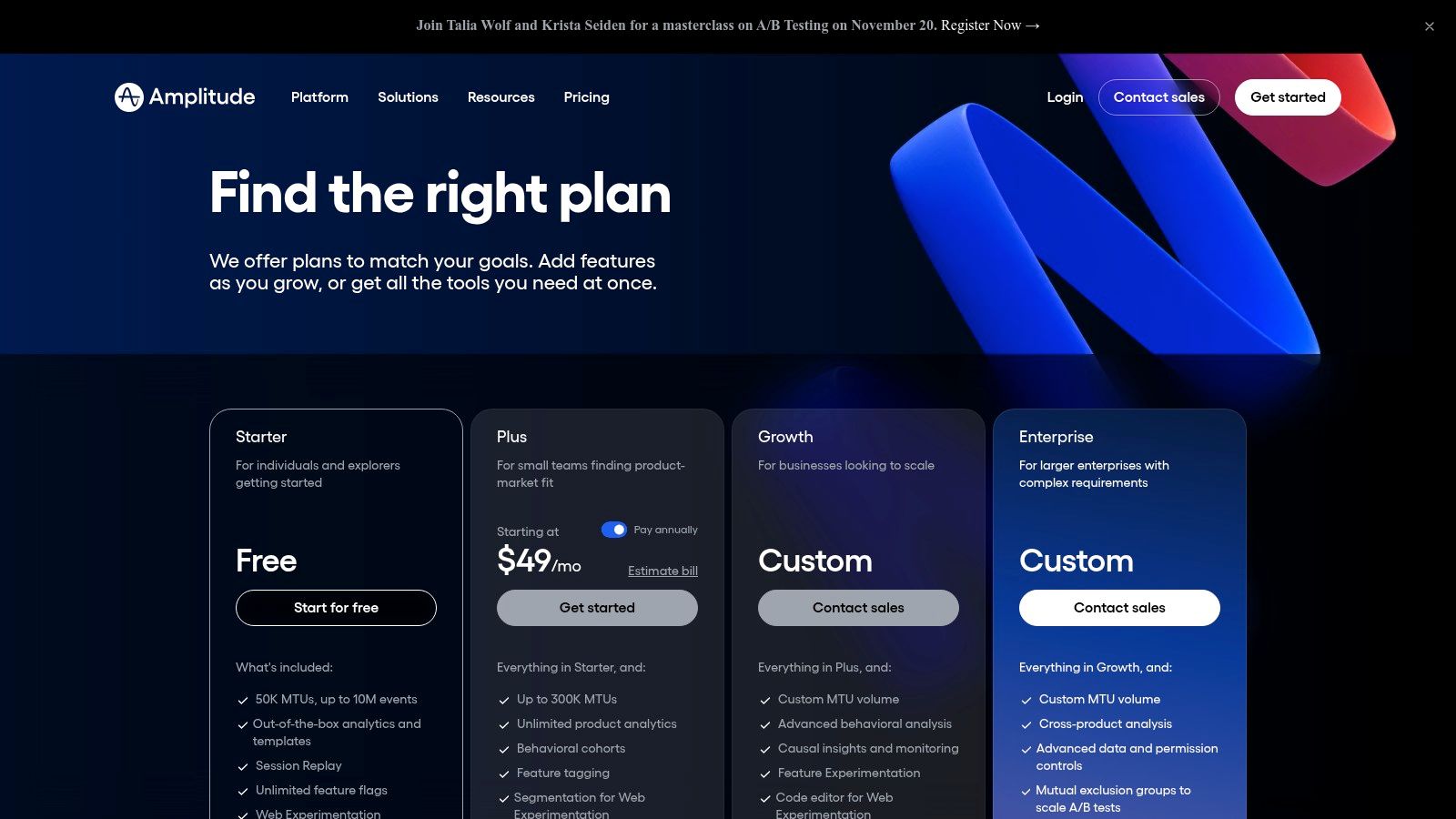
| Feature Highlights | Pricing Info | Key Consideration | | :--- | :--- | :--- | | Product Analytics & Experimentation | Offers a generous Free plan. | The free plan is capped at 50,000 Monthly Tracked Users (MTUs). | | Feature Flags & Session Replay | Plus plan is self-serve with transparent pricing. | Costs can scale quickly as your user base grows. | | Data Warehouse-Native Option | Growth & Enterprise plans require a sales call. | Advanced features like predictive analytics are gated behind enterprise tiers. |
Practical Tip: Start by defining your "critical events" - the key actions users take that signal value (e.g., "project created," "invite sent"). Focusing your initial tracking on these events will give you the most signal with the least noise and make your dashboards immediately useful.
Learn more at amplitude.com
8. Mixpanel
Mixpanel is the go-to product analytics tool for teams who want to move beyond simple page views and understand exactly what users are doing inside their app. It’s built on event-based tracking, which means you can answer critical questions like "How many users completed onboarding?" or "Where do users drop off in our signup funnel?" instead of just counting visitors. This focus on user behavior makes it one of the best tools for product managers aiming to optimize conversion and retention.
Its power lies in visualizing user journeys. You can build funnels on the fly, create cohorts to analyze long-term retention, and explore user flows to uncover friction points you never knew existed. If you’re tired of analytics tools that only tell you half the story, Mixpanel provides the depth needed to make data-informed product decisions. For the other half of the story—what's happening outside your app—https://already.dev can provide the competitive context.
Why It's a Top Pick
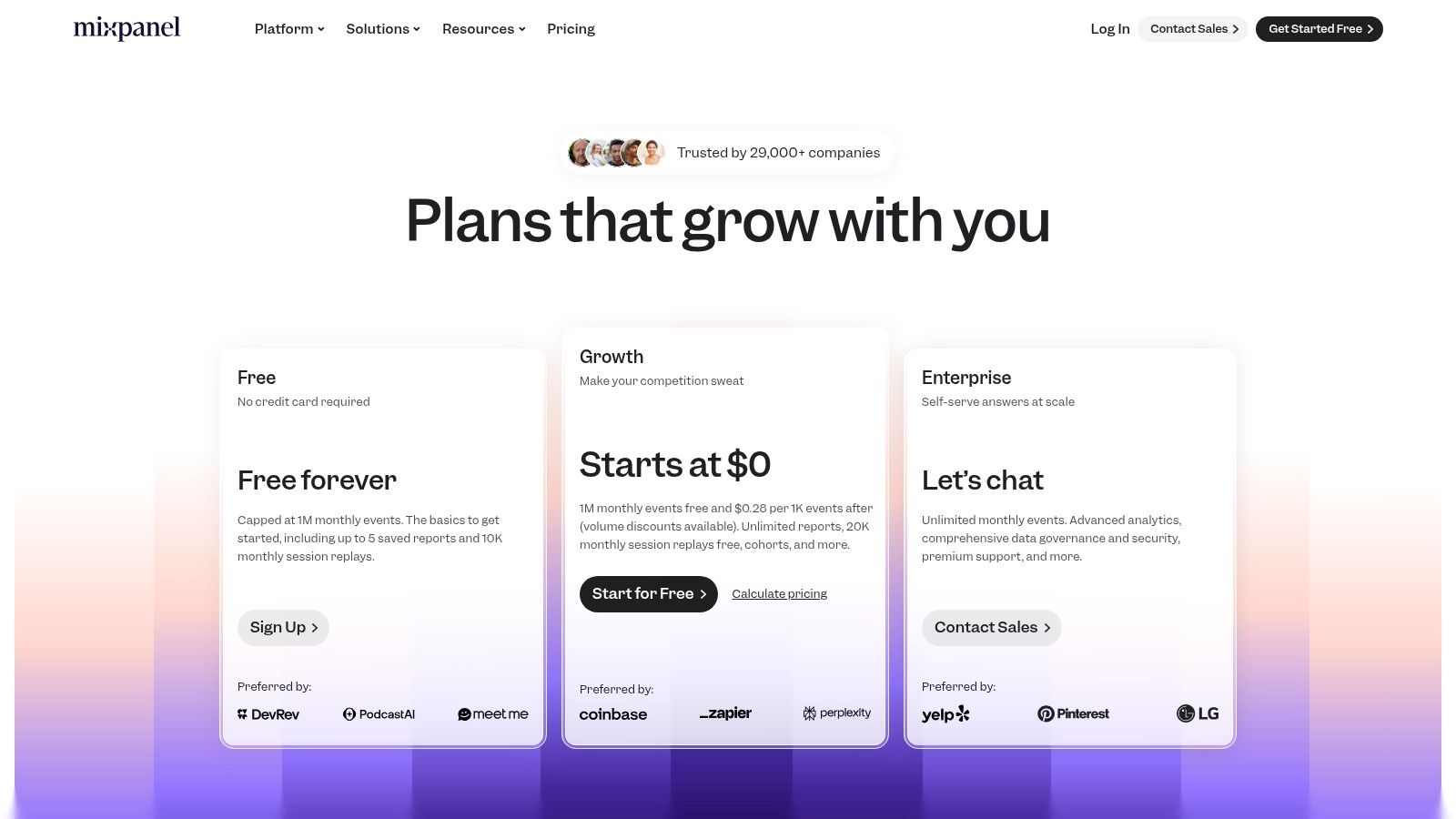
Mixpanel stands out with its generous free tier and transparent pricing, which is a breath of fresh air in the analytics space. Unlike some competitors, it doesn’t gate core features like funnels and retention reports behind expensive enterprise plans. This makes it incredibly accessible for startups and growing teams that need powerful analytics without a massive upfront investment. The self-serve nature of the platform means your team can start answering their own questions without relying on data analysts for every single query.
> Best For: Product teams that need deep, event-based insights into user behavior to improve funnels, boost retention, and understand the complete customer journey.
| Feature Highlights | Pricing Info | Key Consideration | | :--- | :--- | :--- | | Event-Based Analytics | Free plan includes up to 1 million monthly events. | Event volume spikes can lead to unexpected overage costs. | | Funnels & Retention | Growth plan starts at $20/month (billed annually). | Session replay is only available on the Enterprise plan. | | Unlimited Seats | Enterprise plan offers custom pricing. | Add-ons like Group Analytics and Data Pipelines are extra costs. |
Practical Tip: Start by instrumenting just your "Aha!" moment funnel. Track the key 5-7 events a user must complete to find value in your product. This focused approach will give you actionable insights immediately without the overwhelm of tracking everything at once.
Learn more at mixpanel.com
9. Canny
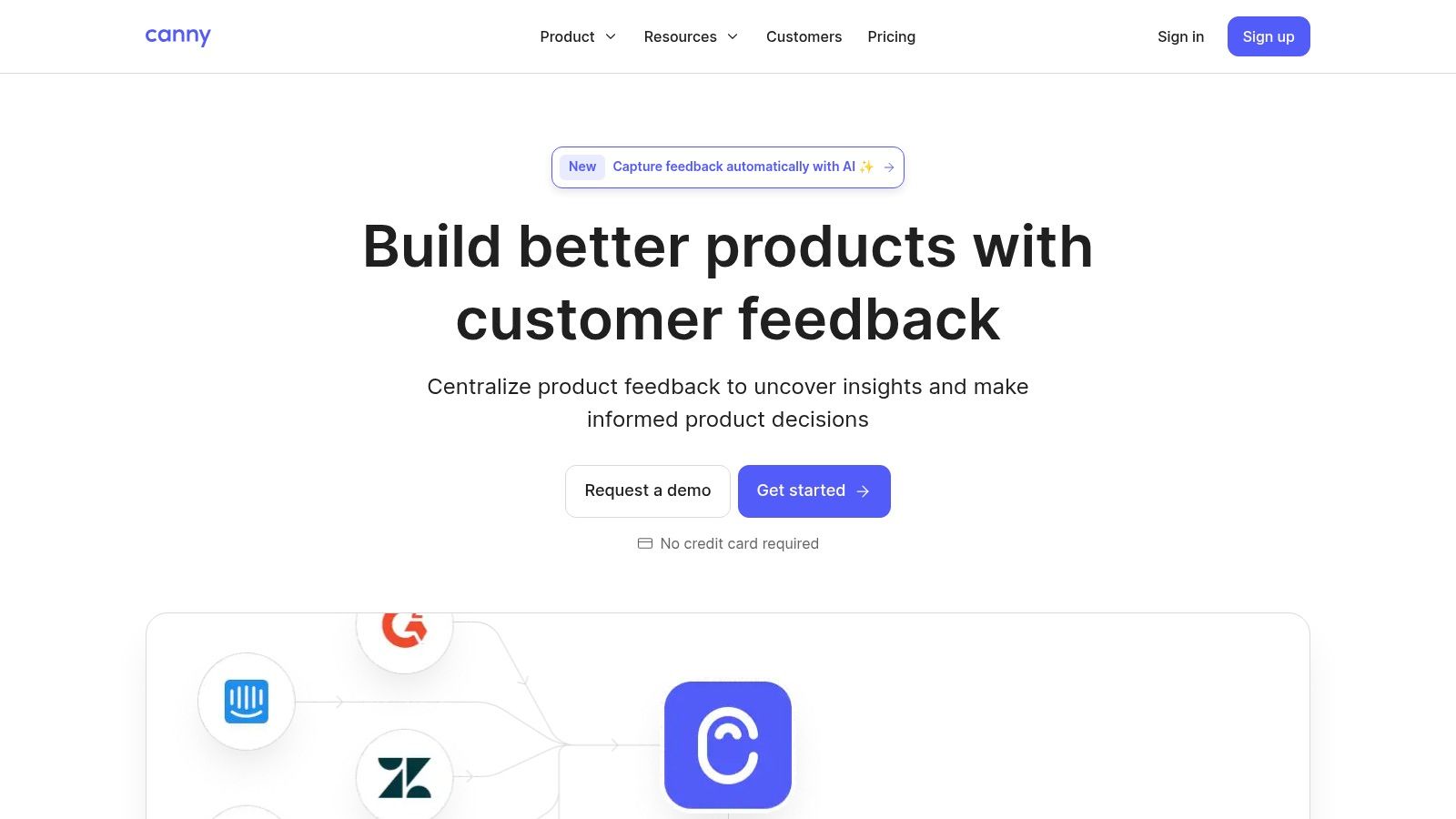
Canny makes it ridiculously easy to spin up a public feedback board and let your users tell you what they want. If you're looking for a quick and effective way to collect, prioritize, and announce new features, Canny is a top contender. It centralizes feature requests, lets users vote on ideas, and closes the loop with a public changelog, all in one clean interface.
Its superpower is simplicity and speed-to-value. You can launch a feedback portal in minutes, allowing your users to immediately start submitting and upvoting ideas. This creates a transparent process that builds customer trust and gives your product decisions a direct line to user demand, making it one of the best tools for product managers who prioritize community engagement. To see what your competitors' users are demanding, you can always check https://already.dev.
Why It's a Top Pick
Canny excels at closing the feedback loop from idea to announcement. The public roadmap and changelog features are seamlessly integrated, so users who voted for a feature are automatically notified when it goes live. For product managers evaluating feedback and roadmap tools, it's beneficial to explore various options. Beyond Canny, you might also consider platforms like Feedbackview, a Canny alternative, which offers similar capabilities for collecting and managing user input.
> Best For: SaaS companies and B2C products that want a simple, public-facing way to capture user feedback, prioritize with votes, and communicate product updates.
| Feature Highlights | Pricing Info | Key Consideration | | :--- | :--- | :--- | | Public Feedback Boards | A Free plan is available. | The free plan is very limited, capped at 25 tracked users. | | Changelog & Roadmaps | Starter plan is $99/month for 100 tracked users. | The price is based on "tracked users," which can add up quickly as you grow. | | User Voting & Prioritization | Growth plan is $399/month for 1,000 tracked users. | Key integrations like Salesforce and advanced admin roles are on the pricey Growth plan. |
Practical Tip: Use Canny's segmentation features to analyze feedback from specific user groups, like enterprise customers or new trial users. This helps you prioritize features that impact your most important customer segments instead of just building what's most popular overall.
Learn more at canny.io
10. Figma
Figma has become the unofficial language of design and product teams, and for good reason. It’s a browser-based collaborative design tool that lets you create everything from low-fidelity wireframes to pixel-perfect interactive prototypes. For a PM, this means you can jump into a design file, leave comments directly on mockups, and see updates in real time, eliminating endless back-and-forth emails with outdated screenshots. It’s the ultimate collaboration hub for visual work.
Its superpower is its seamless ecosystem. With Figma for design, FigJam for whiteboarding, and Dev Mode for developer handoffs, it connects the entire product development lifecycle. This unified platform makes it one of the best tools for product managers who need to stay aligned with design and engineering from initial ideation to final implementation. Forget exporting assets; your developers can inspect code and specs right in the same file. To get inspiration for your designs, you can analyze competitor apps with https://already.dev.
Why It's a Top Pick
Figma's strength is its ubiquity and real-time collaboration. Since most designers and many developers already live in it, the learning curve for PMs is low, and adoption is easy. The ability to give anyone a link to view or comment on a design file simplifies stakeholder reviews and feedback sessions, making the whole process more transparent and efficient.
> Best For: Product managers who need a single, collaborative space to work with designers on specs, flows, and prototypes, and to ensure a smooth handoff to the development team.
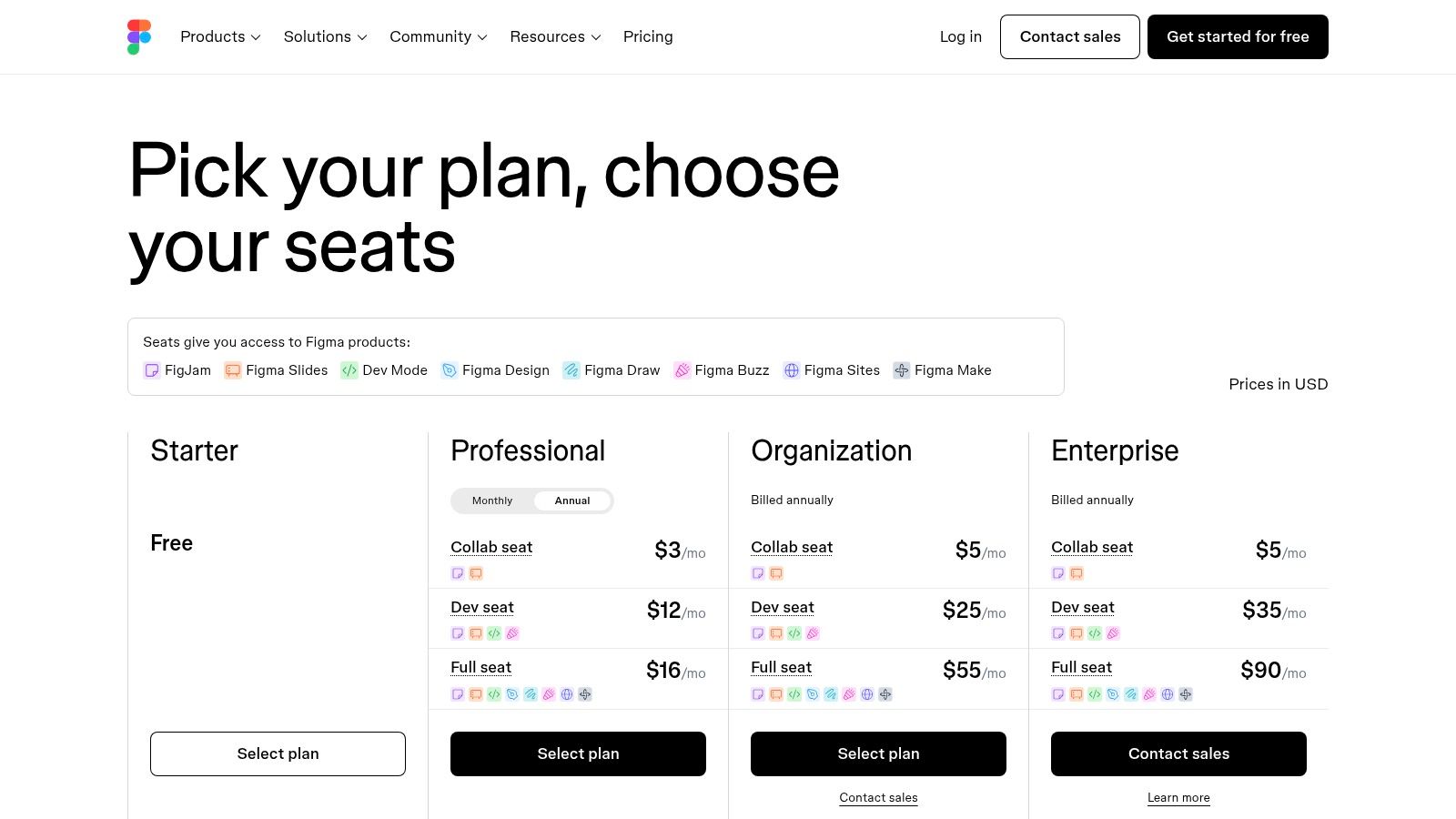
| Feature Highlights | Pricing Info | Key Consideration | | :--- | :--- | :--- | | Real-time Collaboration | Free plan for individuals. | Free plan has file and project limitations. | | FigJam & Dev Mode | Professional plan is $12/editor/month. | The per-seat cost can get expensive for larger teams. | | Component Libraries | Organization & Enterprise plans have custom pricing. | Advanced admin controls are only on the highest-priced plans. |
Practical Tip: Use FigJam for your team's brainstorming sessions, user story mapping, and retrospective meetings. Keeping these artifacts right next to your design files in the same platform creates a cohesive project hub that everyone can easily access.
Learn more at figma.com
11. Dovetail
Dovetail is your central command for user research, turning mountains of qualitative data into actionable insights. It’s designed to pull in customer interviews, survey responses, and support tickets from places like Zendesk and Intercom, and then helps you make sense of it all. If you're drowning in unstructured feedback and need to spot patterns, Dovetail is one of the best tools for product managers to get the job done.
Its superpower is the AI-assisted synthesis. Dovetail can automatically summarize interview transcripts, detect trends across hundreds of feedback notes, and classify data for you. This dramatically speeds up the analysis process, letting you move from raw data to a clear understanding of user needs without spending weeks manually tagging everything. For broader market trends beyond your own users, try https://already.dev.
Why It's a Top Pick
Dovetail excels at building a continuous discovery habit. By creating a unified repository for all customer feedback, it makes research an ongoing activity rather than a one-off project. The interface is clean and modern, encouraging collaboration between PMs, designers, and researchers. The AI features are genuinely useful for finding the signal in the noise. For a deeper dive into how to leverage these insights, check out our guide to market research for product development.
> Best For: Product teams committed to continuous discovery and building a robust voice-of-the-customer program with AI-powered analysis.
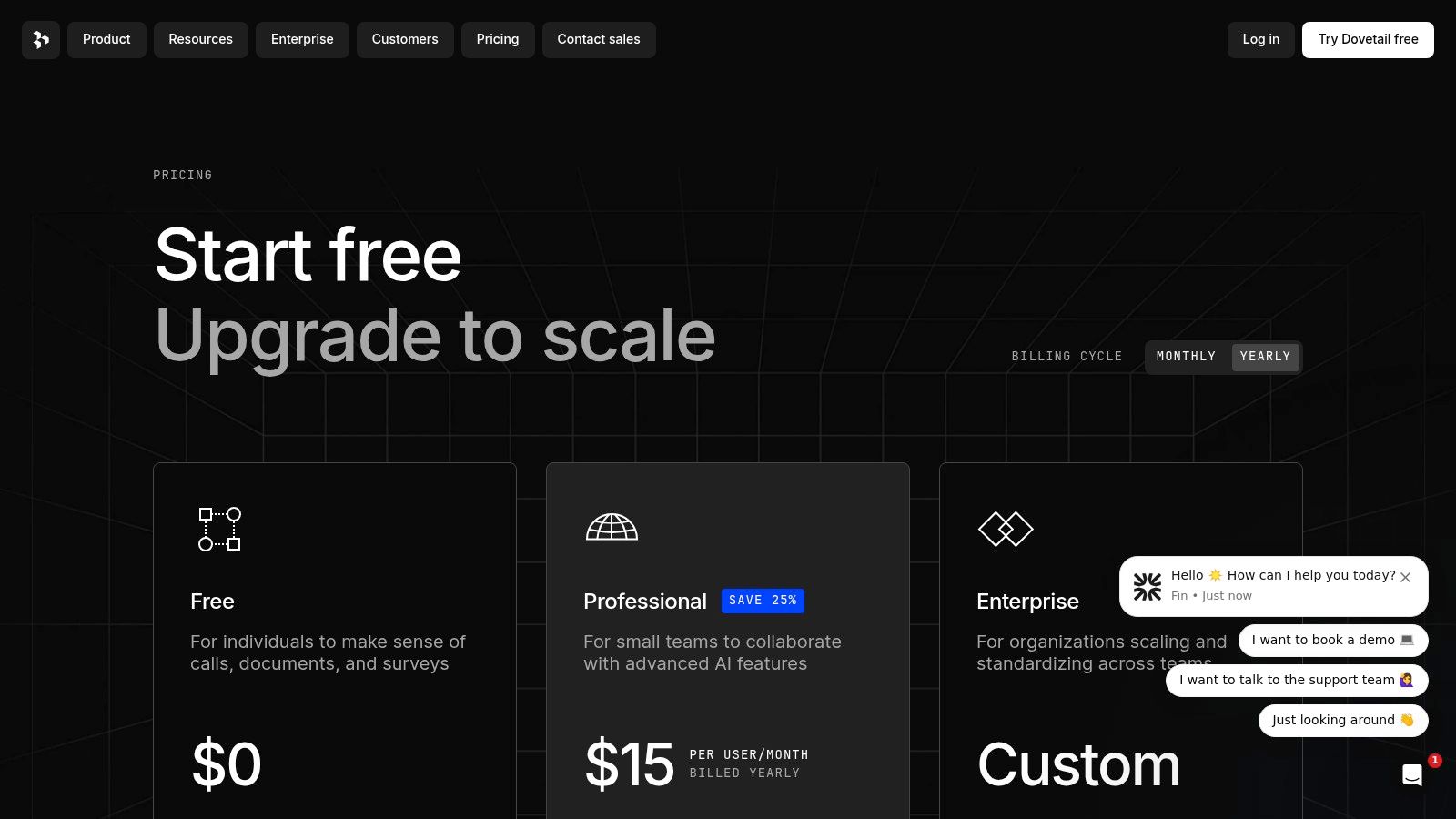
| Feature Highlights | Pricing Info | Key Consideration | | :--- | :--- | :--- | | Centralized Research Hub | Starts with a Free plan for 1 project. | Free plan is quite limited, best for trying it out. | | AI-Assisted Synthesis | Team plan is $30/creator/month. | Pricing scales with usage and data points, which can add up. | | Numerous Integrations | Business & Enterprise plans offer custom pricing. | Advanced governance and security features are locked behind higher tiers. |
Practical Tip: Create dedicated "channels" in Dovetail that automatically pull in feedback from sources like App Store reviews or Zendesk tickets. This creates a real-time stream of user sentiment your team can monitor and analyze without manual importing.
Learn more at dovetail.com
12. G2 — Product Management Software Category
Instead of a single tool, sometimes you need a map of the entire landscape. G2’s product management software category is your go-to starting point for research. It’s a massive software marketplace and review platform that helps you compare dozens of tools using verified user reviews, up-to-date rankings, and handy filters. If you’re trying to build a shortlist or validate a vendor, this is where you begin.
The platform’s power lies in its structured data and real-world feedback. You can quickly see who the market leaders are, read detailed pros and cons from actual users, and compare features side-by-side. It cuts through the marketing noise and helps you understand how a tool performs in practice, making it one of the best resources for product managers building their initial tech stack. Another great resource for finding competitors that G2 might miss is https://already.dev.
Why It's a Top Pick
G2 is a huge time-saver. Instead of opening 20 different tabs and trying to compare pricing pages, you get a consolidated view. The G2 Grid plots tools based on market presence and user satisfaction, giving you a quick visual reference for who’s established and who’s a rising star.
> Best For: Product managers in the discovery phase who need to quickly research, compare, and shortlist potential tools based on verified peer reviews and market data.
| Feature Highlights | Pricing Info | Key Consideration | | :--- | :--- | :--- | | Verified User Reviews | Free to browse reviews and categories. | Sponsored placements can influence which tools appear first. | | Market Grids & Scoring | Advanced reports and buyer-intent data are paid. | Downloading some in-depth reports requires creating a user account. | | Side-by-Side Comparisons | Vendors pay for premium profile features. | The sheer number of options can be overwhelming without using filters. |
Practical Tip: Use the filters to narrow down your options by company size, industry, or specific features. Start with the "High Performers" quadrant on the G2 Grid to find tools that are highly rated by users but may not be the biggest names in the market yet. It’s a great way to find hidden gems. For more on this, check out our guide to product competition analysis.
Learn more at g2.com
Top 12 Product Management Tools Comparison
| Product | ✨ Core / Unique Features | ★ UX / Quality | 💰 Pricing & Value | 👥 Target Audience | |---|---:|:---:|:---:|---| | 🏆 Already.dev | Agentic AI crawl across app stores, GitHub, forums; automated classification & visual reports | ★★★★★ — rapid, high‑coverage (40h → ~4min) | 💰 Free first search; single report ≈ $93; credit packs (10/30) | 👥 Founders, VCs, PMs, innovation teams | | Productboard | Feedback-to-roadmap workflow; portals & prioritization | ★★★★ — user-focused roadmap UX | 💰 Maker-based tiers; free starter → scalable plans | 👥 Product teams wanting feedback-driven roadmaps | | Aha! Roadmaps | Strategy-to-delivery, advanced reporting, ideas portals | ★★★★ — feature-rich for enterprises | 💰 Higher entry price; enterprise billing | 👥 Large orgs, PMOs, strategy teams | | Jira Product Discovery (Atlassian) | Native Jira integration; custom views & AI | ★★★★ — seamless if on Jira ecosystem | 💰 Best value within Atlassian stack; tiered pricing | 👥 Jira users, engineering-led teams | | ProductPlan | Audience-friendly visual roadmaps; unlimited viewers | ★★★★ — polished, boardroom-ready visuals | 💰 Annual contracts; consult-to-quote | 👥 Enterprises needing governance & exec-ready plans | | Strategic Roadmaps (Roadmunk) | Timeline & swimlane roadmaps; idea mgmt; reviewer seats | ★★★★ — clear portfolio views | 💰 Annual billing typical; tiered plans | 👥 PMs seeking shareable executive roadmaps | | Amplitude | Product analytics, experimentation, feature flags | ★★★★ — analytics + activation suite | 💰 Free tier (up to 50K MTUs); scales with MTUs | 👥 PLG teams, product analytics teams | | Mixpanel | Event-based funnels, retention, cohorts | ★★★★ — strong self-serve analytics | 💰 Free up to 1M events; usage-based scaling | 👥 Growth & analytics teams | | Canny | Public feedback boards, voting, changelogs | ★★★★ — quick to launch feedback portals | 💰 Tracked-user pricing; free tier limits | 👥 PMs, support teams, early-stage startups | | Figma | Collaborative design, FigJam, Dev Mode | ★★★★★ — ubiquitous for design collaboration | 💰 Per-seat pricing; free viewers/comments | 👥 Designers, product & engineering teams | | Dovetail | Research repo with AI summaries & integrations | ★★★★ — streamlined qualitative analysis | 💰 Usage/data-point based pricing | 👥 UX researchers, discovery teams | | G2 — Product Mgmt Category | Marketplace of reviews, rankings, buyer resources | ★★★★ — fast vendor shortlisting | 💰 Free browsing; gated deeper data/accounts | 👥 Buyers, procurement, evaluators |
Stop Collecting Tools, Start Building Products
Whew, that was a lot of tools. If you’re feeling a bit overwhelmed, take a deep breath. The goal here isn't to sign up for a dozen new subscriptions and spend your next sprint just setting up integrations. The real aim is to find the one or two platforms that solve your most painful, time-sucking problems right now.
We've toured through the heavyweight champions of roadmapping like Productboard and Aha!, explored the nitty-gritty of user behavior with analytics powerhouses like Amplitude and Mixpanel, and touched on essentials for user research and prototyping. Each one is powerful, but not a single one is a magic bullet. The secret isn't in having the most impressive tech stack; it's about building the right one for your team's unique workflow and stage.
Remember, the best tools for product managers are the ones that actually get used and fade into the background, letting you focus on strategy, users, and execution.
Your Action Plan: How to Choose Without the Headache
So, where do you go from here? Don't just pick the tool with the slickest marketing video. Instead, take a strategic approach to building your perfect PM toolkit.
-
Identify Your Biggest Bottleneck: What’s the single biggest thing slowing you down? Is it a messy backlog of user feedback? A complete lack of insight into your competitors' moves? Are you spending days manually updating a roadmap in a spreadsheet? Pinpoint that one core problem.
-
Start Small, Think Lean: Resist the temptation to adopt an all-in-one "solution" that promises to do everything but probably does most of it poorly. Instead, choose a best-in-class tool for your primary bottleneck. If your competitive intelligence is a black hole, a specialized tool like https://already.dev is a smarter first step than a massive, do-it-all platform.
-
Run a Pilot Program: Before you roll out a new tool to the entire company, test it with a small, dedicated group. Define what success looks like ahead of time. Is it saving 5 hours a week on reporting? Is it uncovering three actionable user insights per month? Measure the impact before you commit.
-
Prioritize Integration: Your PM stack should feel like a cohesive system, not a collection of isolated islands. Make sure any new tool plays nicely with your existing core software, like Slack, Jira, or whatever your engineering team lives in. A tool that creates more manual data entry is a step backward.
The Real KPI is Shipping Great Products
Ultimately, tools are just a means to an end. They can help you organize feedback, visualize data, and align stakeholders, but they can't have the breakthrough idea for you. They can't conduct a compelling user interview or make the tough call on what not to build. That’s still your job.
The most successful product managers don't win because they have the most expensive software subscriptions. They win because they have an almost obsessive focus on the customer and a relentless drive to ship products that solve real-world problems. Use this list to find the tools that will clear the administrative clutter from your path, automate the tedious tasks, and give you back the time and mental space to do what you do best: build amazing products.
Feeling buried by competitor research and struggling to find your next big feature? Stop wasting hours manually tracking rivals. Already.dev gives you an instant, automated competitive analysis so you can focus on building, not just browsing. See how your product stacks up and uncover market gaps at Already.dev.