Your Sales Battlecard Template to Win More Deals
Grab our free sales battlecard template and arm your team with the intel they need. Stop losing deals and start closing them faster today.
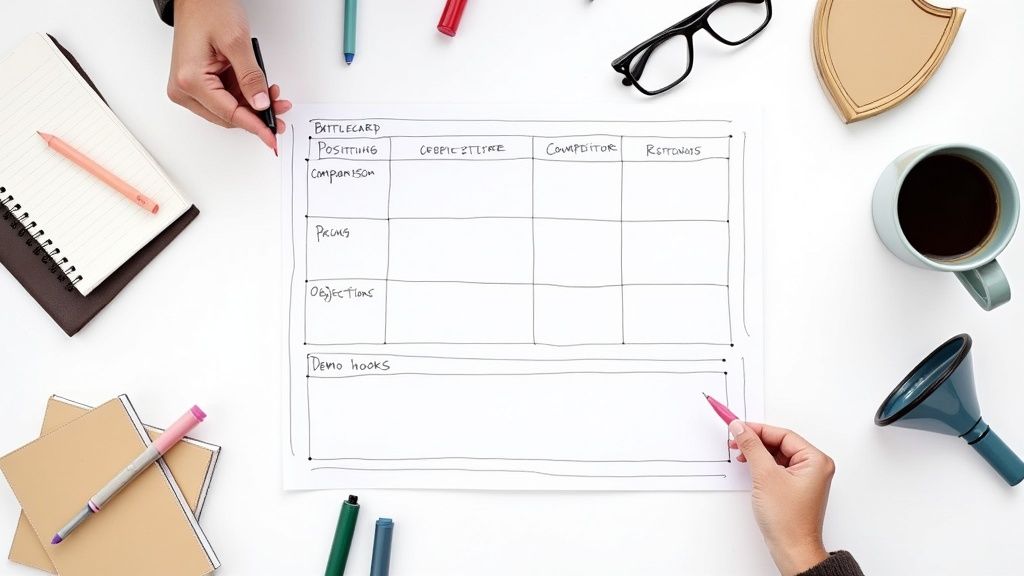
A solid sales battlecard is your team’s secret weapon. It’s what turns those tricky, confusing conversations about competitors into clear closing opportunities.
Think of it as a one-page cheat sheet that gives your reps the exact talking points, pricing info, and objection-handling scripts they need to sound like absolute experts on every single call. No more "uhhh, let me get back to you on that."
Why Your Team Is Losing Deals Without Battlecards
Let's be real—selling is hard. It gets even harder when your reps are fumbling for an answer about a competitor or can't quite remember that killer one-liner about your best feature.
Without a battlecard, your team is basically showing up to a sword fight with a pool noodle. They look unprepared, and believe me, prospects can smell that uncertainty from a mile away.
This is more than just a document; it's a confidence booster in a can. When a rep knows they have a trusted, go-to resource at their fingertips, they stop dreading questions like, "So, how are you different from Competitor X?" Instead, they start seeing them as the perfect setup to highlight your strengths.
The Real Cost of Winging It
Every single time a rep says, "Let me get back to you on that," a little bit of the deal's momentum fizzles out. In that pause, the prospect is already Googling your competitor, reading their glowing reviews, and booking a demo with them. You've just lost control of the narrative.
Here’s what really happens when teams try to wing it:
- Painfully Long Ramp-Up Times: New hires take forever to feel confident. They're trying to learn the product, the market, and the entire competitive landscape all at once. It’s like trying to drink from a firehose.
- Wildly Inconsistent Messaging: One rep is throwing out discounts left and right while another is pushing a feature you barely support. It's chaos, and your brand looks completely disorganized.
- Straight-Up Missed Opportunities: Your reps don't know the competitor's biggest weakness, so they never ask the one "landmine" question that could have won the deal right on the spot. Ouch.
> A battlecard isn't just another internal doc; it’s a strategic tool. It’s the difference between a salesperson who is just reacting and one who is actively guiding the conversation toward a win.
The Data Doesn't Lie
This isn't just about feeling more prepared; it's about closing more deals. The numbers back it up. Companies that actually use battlecards see a major impact on their bottom line.
Data from Buyerstage.io shows that sales teams using battlecards can boost their close rates by up to 20%. They also shorten sales cycles by a massive 15% to 30%. Why? Because they nail their positioning every single time.
Ultimately, battlecards turn that "tribal knowledge" floating around the office into a scalable, powerful asset. The insights from every call—good and bad—get captured and shared. The first step is a proper win and loss analysis, and the battlecard is where those invaluable lessons truly come to life.
Anatomy of a Battlecard That Actually Works
Let’s be honest. A bad battlecard is just a glorified Word doc that gathers dust. It’s a wall of text that gets completely ignored when a sales rep is in the middle of a high-stakes call.
A great battlecard, on the other hand, is a scannable, punchy cheat sheet. It's built to deliver the perfect piece of intel right when your rep needs it most. This isn't just about listing your features next to a competitor's. It's about arming your team for the win.
The real secret is in the structure. The best teams design their battlecards for action, not just information. It's no surprise that 85% of organizations who nail their battlecards follow a structured approach. Think of it in three parts: 'Fact' (the raw competitive intel), 'Impact' (why this actually matters to the customer), and 'Act' (what your rep should say or do right now). If you want to dive deeper into this framework, the team at Qwilr explains it well.
So, what sections are absolutely non-negotiable? Here’s a quick breakdown of the core components that turn a simple document into a deal-closing machine.
Must-Have Sections for Your Sales Battlecard
| Section | What Goes Inside | Why It Matters | | :--- | :--- | :--- | | Positioning | Your elevator pitch, ideal customer profile (ICP), and core value prop in a few bullet points. | This is your team's "true north." It keeps everyone grounded in your core message. | | Competitor Intel | Key weaknesses, "landmine" questions to ask prospects, and direct feature comparisons. | Arms your reps with the exact talking points to expose competitor gaps without badmouthing. | | Pricing Comparison | A simple breakdown of your pricing vs. theirs, focusing on value, not just cost. | Helps reps justify your price and counter the "you're too expensive" objection. | | Objection Handling | A list of common objections and proven, one-to-two sentence responses. | Prepares your team for curveballs so they can respond with confidence instead of panic. | | Demo Hooks & Stories | Quick, impactful customer stories or "wow" moments to show during a demo. | Turns a feature walkthrough into a compelling story that resonates with the prospect's pain. |
Let's unpack a couple of the most critical sections.
Your Company Positioning
Think of this as your home base. It’s a super short, punchy reminder of who you are, what specific problem you solve, and why you’re the absolute best choice. This isn't your full-blown mission statement—it’s the 30-second elevator pitch boiled down to its essence.
- Our Sweet Spot: Who is our perfect customer? (e.g., "Early-stage SaaS startups drowning in manual competitive research.")
- The Big Problem We Solve: What pain do we make disappear? (e.g., "We stop founders from wasting months building a product nobody wants.")
- Our Secret Sauce: What's our unique value? (e.g., "AI-driven insights that deliver in minutes what takes a human analyst weeks.")
This section grounds your reps in your core value before they even start thinking about the competition. It's the foundation for every conversation.
Competitor Landmines and Weak Spots
Okay, this is the fun part. Forget just listing a competitor’s features. Here, you arm your reps with "landmine" questions—carefully crafted questions that expose a competitor's weakness without ever mentioning their name.
Let's say you know a rival has a notoriously clunky onboarding process. A landmine question could be: "What's your team's plan for getting fully ramped up and seeing real value within the first week?"
> You’re not just providing data; you’re scripting the conversation. A good battlecard tells your reps exactly what to say to subtly guide a prospect toward your strengths and away from a competitor's weaknesses.
To get this kind of killer intel, you need to do your homework. A thorough competitive analysis template is your best friend here. It helps you organize your research so you can pull out the most damaging weaknesses and turn them into tactical advantages.
When you structure your battlecard this way, the impact on sales outcomes is immediate and measurable: faster sales cycles, higher win rates, and a far more confident team.
Ultimately, this isn't just about creating a document. It's about building a powerful tool for growth that directly translates into more revenue.
Gathering Intel Without an Enterprise Budget
Okay, so you've got the blueprint for your shiny new sales battlecard template. Now comes the million-dollar question: where the heck do you find all this juicy intel?
This is where a lot of startups get stuck. They assume you need a massive budget and a suite of fancy competitive intelligence tools to get the good stuff.
Let’s just bust that myth right now. You don't. You just need to be a little scrappy and know where to look.
Become a Digital Detective
Your competitors are leaving a trail of digital breadcrumbs all over the internet. Your job is simply to follow it. This isn’t some shady corporate espionage mission; it's just about paying close attention to what they’re already telling the world.
Start with the obvious places:
- Customer Review Sites: Dive headfirst into G2, Capterra, and Trustpilot. Go straight to the 1-star reviews to find their biggest weaknesses. Then, read the 5-star reviews to see what their loyal fans are raving about (and what you need to have a counter for).
- Competitor Marketing Materials: Sign up for their webinars. Download their white papers. Get on their email list. They will literally hand you their entire positioning strategy and tell you exactly which features they're most proud of.
- Social Media & Forums: Jump on Reddit or LinkedIn and just search for your competitor's name. You'll uncover a goldmine of unfiltered customer complaints, honest questions, and real-world pain points.
> The best intel often comes directly from the mouths of your competitor's customers. They'll tell you everything you need to know—their frustrations, their workarounds, and the exact language they use to describe their problems.
Effective battlecards depend on solid customer and competitor data. To keep all this intel organized (especially when you're on a tight budget), you might consider building your own system. Learning how to build a powerful Notion CRM template can give you a central hub to stash all the valuable nuggets you find.
Smart Tools for Scrappy Teams
While digging manually is essential, a few tools can speed things up. Sure, big SEO platforms like Ahrefs or Semrush are incredible for seeing what keywords competitors rank for, but let's be real—they can be expensive.
For most startups, a more focused tool is a much better bet. An AI-driven platform like already.dev, for instance, can do the heavy lifting by analyzing the market and uncovering competitor positioning in minutes, not weeks. It’s built for teams that need actionable data without the enterprise price tag.
But honestly? The most underrated source of intel is probably sitting in the next room (or Slack channel).
- Your Sales Reps: They are on the front lines, hearing objections and competitor names all day long. Create a dedicated Slack channel where they can drop real-time insights from their calls. It's that simple.
- Your Customer Success Team: These folks know exactly why customers made the switch from a competitor over to you. Talk to them. Their insights are pure gold for your battlecard.
By mixing and matching these scrappy methods, you can pull together all the intel you need for a truly killer sales battlecard.
How to Build Your First Battlecard Template
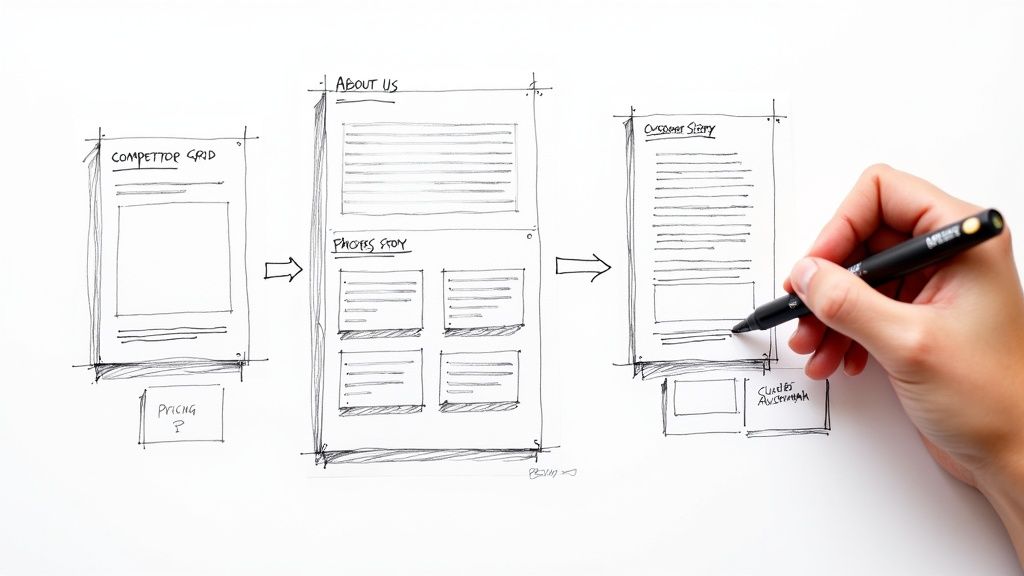
Alright, enough with the theory. Let's roll up our sleeves and actually build this thing.
Forget about needing fancy software or design skills. We're going to start from scratch with a blank document—think Google Docs or Notion—and put together a killer sales battlecard template.
The goal here isn't to create a work of art. It’s to build a functional, easy-to-scan tool that your sales reps will actually want to use when a call gets tough. Considering that 71% of businesses using battlecards report higher win rates, it's worth getting this right.
We'll tackle this piece by piece, filling in all the essential sections. By the end, you'll have a ready-to-use asset. No fluff, just action.
Crafting Your Positioning Blurb
First up is the "About Us" section. This is not the place for your company’s full origin story. It needs to be a lightning-fast reminder of who you are, who you serve, and why you matter. Think of it as your team’s North Star before they jump on a competitive call.
Your blurb should answer three simple questions, ideally in bullet points:
- Who do we help? (e.g., "B2B SaaS companies with lean marketing teams.")
- What problem do we solve? (e.g., "They can't justify hiring a full-time content writer.")
- How do we do it differently? (e.g., "Our AI generates SEO-ready articles in minutes, not days.")
Keep it brutally simple. If a rep can't digest this in five seconds, it’s too complicated.
> Pro Tip: Try writing this section like you're explaining it to a friend at a barbecue. Drop the corporate jargon. If you wouldn't say "synergistic value creation" in real life, don't write it here.
To make sure your battlecard messaging aligns with your broader sales strategy, it's a good idea to check out some actionable sales playbook examples. They offer a great framework for keeping everything consistent.
Building the Competitor Smackdown Grid
Now for the main event: the competitor comparison. This is where most battlecards get bloated and become useless. We’re going to keep ours lean and mean.
Just create a simple four-column table.
| Feature/Area | Our Awesome Product | Competitor X (The Clunky One) | Talking Point for Reps | | :--- | :--- | :--- | :--- | | Onboarding Time | Under 10 minutes | 2-3 day manual setup | "How important is seeing value on day one for your team?" | | Support | 24/7 Live Chat | Email only (48hr SLA) | "What's your plan for when you need an answer right now?" | | Key Feature Z | Automated & AI-driven | Manual data entry | "Who on your team has time to handle manual data entry?" |
That last column is where the magic happens. You’re not just listing facts; you're arming your reps with the exact landmine questions to ask. You're basically scripting the "aha!" moment for the prospect.
Nailing Objection Handling and Pricing
Your reps hear the same objections day in and day out. Don't make them reinvent the wheel on every call.
Create a quick two-column list of the greatest hits and your team's proven comebacks.
- Objection: "You're too expensive."
- Response: "I get it. When you consider your team spends about 10 hours a week on this manually, our tool actually eliminates that cost entirely."
When it comes to pricing, don't just list your tiers. Frame them in terms of value. Show what a customer gets for their money, especially next to the competition.
Instead of just "$99/month," try framing it as "$99/month gets you 40 hours of reclaimed productivity." This simple shift reframes the entire conversation from a cost into an investment.
Finally, pull it all together. To make it even easier, we've created a starter template you can grab right now. Just download our Google Docs Battlecard Template and start plugging in your own intel.
Keeping Your Battlecard Fresh and Relevant
You’ve built the perfect sales battlecard template. It’s a work of art, packed with competitive intel, sharp talking points, and answers to every tough question. But I'm going to tell you a hard truth: a battlecard that isn't regularly updated is just a pretty document taking up space.
Honestly, the biggest mistake teams make is treating their battlecard like a one-and-done project. Your market is a living, breathing thing. Your competitors are shipping new features, and your reps are learning what works and what doesn't on calls every single day. A static document gets stale, and it gets stale fast.
And a stale battlecard is actually worse than having no battlecard at all. Why? Because it puts outdated, flat-out wrong information in the hands of your sales team.
Stop It from Gathering Dust
So, how do you keep this crucial tool alive and kicking? The secret is a dead-simple process, not another clunky workflow that everyone ignores after a week. You have to make updating the battlecard a team sport, not a solo mission dumped on some poor soul in marketing.
First things first, assign an official "Battlecard Owner." This person doesn't need to be the source of all knowledge, but they do need to be the designated nag. Their job is to own the process and schedule a recurring "battlecard review" on the calendar. Once a quarter is a good cadence to start with.
Next, you need a frictionless way for your team to share intel from the field. I’m a huge fan of creating a dedicated Slack channel for this—something like #competitive-wins or #battlecard-intel. This gives reps an easy place to drop golden nuggets of information right after a call.
- Did a prospect bring up a new competitor feature? Drop it in the channel.
- Did a new line for handling an objection work like a charm? Share the win.
- Spotted a competitor's new pricing page? Screenshot it and post it.
> The goal here is to create a living feedback loop. Your sales reps are your front-line intelligence officers; failing to use their daily insights is like leaving a gold mine completely untapped.
Launch It with a Bang, Not a Whimper
Finally, if you want your team to actually use the battlecard, you can't just drop a link in an email and cross your fingers. You have to launch it like it’s a new product.
Hold a fun, interactive training session to roll it out. Run through a few role-playing scenarios where reps have to use the new battlecard to navigate tough questions. Make it a game, offer a small prize for the best "landmine" question, and build some real excitement around it.
When your team sees the battlecard as their tool—something they helped build and are actively improving—it becomes an indispensable part of how they sell. It stops feeling like a chore and starts being the weapon they can't imagine going into a deal without.
Got Questions? We've Got Answers
You've got questions, we've got answers. Building your first sales battlecard template can feel like a big project, but it’s really just about tackling a few common hurdles. Let's clear up some of the usual suspects.
How Often Should I Update My Battlecard?
Think of your battlecard like a garden, not a statue. If you just leave it, it's going to get overrun with weeds (aka, outdated info). As a baseline, I recommend a full, top-to-bottom review every quarter.
But let’s be real, the market doesn't wait for your calendar invite. You need to be making quick, on-the-fly updates whenever something big happens:
- A competitor drops a major new feature.
- Your team finds a killer new talking point that's crushing it on calls.
- There's a big shift in a competitor's pricing or packaging.
The easiest way I've found to manage this is with a dedicated Slack channel. Call it #battlecard-intel or something similar. Reps can drop insights in real-time, and you have a living feed of what needs updating.
What’s the Ideal Length for a Battlecard?
Shorter than you think. A battlecard is a cheat sheet, not a novel. If your rep has to scroll endlessly or squint at a wall of text during a live call, you’ve already lost.
The magic number? One page. Seriously. The entire goal is scannability. Use bullet points, bold text, and clear headings so a rep can find the exact piece of information they need in three seconds or less. If it doesn't fit, it's probably too complicated.
> A battlecard that's too long is a battlecard that won't get used. Brevity is your best friend here. Be ruthless in cutting out anything that isn't absolutely critical for a rep to know in that moment.
How Do I Adapt It for Different Competitors?
Whatever you do, don't try to cram every competitor into one monster document. That's a recipe for disaster and will just confuse your reps. Instead, create a separate, dedicated battlecard for each of your top 3-5 competitors.
This is where you get to be surgical. For Competitor A (the big, expensive legacy tool), your battlecard should be all about your agility and better pricing. For Competitor B (the scrappy new startup), you'll want to lean into your stability and proven customer stories.
To keep an eye on what these competitors are up to, you can use SEO tools. Some, like Ahrefs or Semrush, are incredibly powerful but can come with a hefty price tag. A more focused alternative like already.dev can give you the core insights on competitor positioning without the enterprise-level cost.
Ready to stop guessing and start winning? Already.dev uses AI to uncover your entire competitive landscape in minutes, giving you the data-driven insights you need to build a battlecard that closes deals. Find your competitive advantage today.